
Modular Water Storage Tank Systems for High-Capacity Commercial Hot Water Needs
High-capacity commercial hot water systems are rarely limited by heating technology alone. In my experience designing and evaluating systems for hotels, laundries, resorts, and multifamily properties, the true constraint is almost always storage and load management. When draw profiles spike, traditional tanks struggle to keep pace. When storage is undersized, upstream equipment short cycles. When it is oversized, energy is wasted.
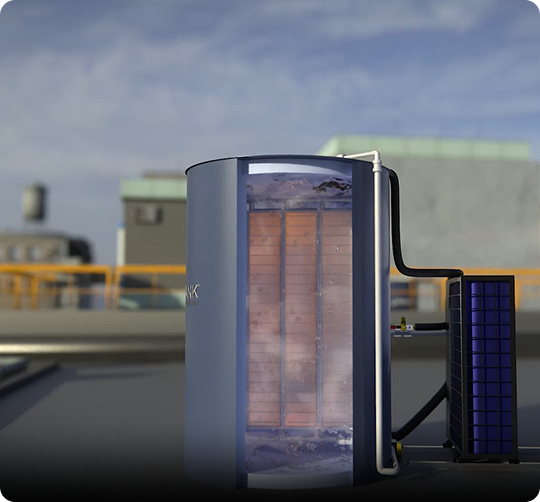
This is why the modular water storage tank has become a cornerstone of modern thermal energy storage strategy. By combining scalable capacity, optimized insulation, and compatibility with high-efficiency heating sources, the modular thermal tank transforms high-demand hot water applications into stable, predictable systems.
Understanding High-Capacity Draw Profiles in Commercial Buildings
High-capacity commercial facilities do not consume hot water evenly. Instead, they experience intense spikes driven by occupancy behavior and operational cycles. Hotels see concentrated morning peaks. Laundries operate in batch cycles. Multifamily properties experience synchronized morning and evening demand. Resorts combine guest use, kitchens, and housekeeping loads. Without adequate thermal energy storage, heating equipment must respond instantly to these spikes, leading to inefficient cycling and mechanical stress. A modular water storage tank absorbs this variability, storing energy in advance and delivering it steadily during peak demand. By aligning storage capacity with actual draw profiles, engineers can stabilize performance and avoid oversizing primary heating equipment, improving long-term efficiency and reliability.
Peak-Load Math: Why Storage Size Matters
Why Modular Water Storage Tanks Excel in High-Demand Environments
Traditional tanks present logistical and performance constraints in high-capacity settings. They are heavy, difficult to transport, and limited in scalability. A modular water storage tank removes these limitations by assembling on-site and allowing incremental capacity expansion.
Key advantages for high-capacity facilities
- Scalable storage capacity aligned with real demand growth
- On-site assembly for tight mechanical rooms and rooftop installations
- Reduced structural load during installation
- Improved insulation retention to minimize standby losses
For hotels, multifamily buildings, and industrial laundries, these benefits translate directly into operational stability. Instead of reacting to unpredictable spikes, the system operates predictably with stored thermal energy ready for dispatch.
Application Focus: Hotels and Resorts
Application Focus: Industrial and Commercial Laundry
A modular water storage tank allows these spikes to be absorbed without forcing continuous ramp-up of heating equipment. Energy is stored between cycles and dispatched during wash events. This approach reduces cycling losses, improves temperature consistency, and lowers mechanical strain on the heating system. For laundries, storage stability also improves operational predictability. Equipment downtime is reduced because heating systems are not repeatedly pushed to maximum capacity. Over time, this reduces maintenance costs and extends overall system life.
Application Focus: Multifamily Buildings
Multifamily properties exhibit synchronized occupant behavior. Morning showers before work and evening usage patterns create predictable but concentrated draw windows. Centralized hot water plants without sufficient storage must respond instantly to these loads.
Multifamily storage benefits
- Balanced morning and evening peak coverage
- Reduced cycling of central heating equipment
- Improved supply temperature stability across units
- Easier future expansion as occupancy increases
A modular thermal tank approach allows property managers to size storage precisely to measured usage. As occupancy rises or new units are added, additional modules can be integrated without replacing existing infrastructure. This adaptability makes modular systems ideal for long-term property investment strategies.
Talk to our experts about your energy situation today.
Draw Profiles and System Optimization
Effective thermal energy storage begins with accurate draw profile modeling. By analyzing hourly usage patterns, engineers can calculate how much energy must be stored to cover peak demand without oversizing the heating plant.
When storage is properly aligned with demand:
- Heating equipment operates in steady, efficient cycles
- Peak power draw is reduced
- Standby losses are minimized through insulation performance
- System resilience improves during high-occupancy events
This data-driven design approach reflects real operational experience rather than theoretical assumptions. Storage capacity becomes a calculated variable, not a guess, improving both energy efficiency and long-term asset reliability.