When we start our day, most of us aren’t thinking about how the water in our homes or commercial buildings is being heated. Hot water simply appears when we turn the tap, and the system behind it rarely crosses our minds—until the monthly utility bill arrives or something fails. That’s when the questions begin.
For decades, the choice was straightforward: replace your old system with a similar model, find a reputable contractor, check the energy-efficiency rating, and get on with life. But as Bob Dylan famously put it, “The times they are a-changin’.” Today, we’re facing a much bigger decision: Do we continue burning fuel—wood, oil, or natural gas—or switch to an electric solution? And if we go electric, should we choose a tankless heater or invest in a heat pump?
Before we dive into the economics, here’s a quick breakdown of how the two main electric options work:
Tankless electric heaters use immersion heating elements—metal components that get hot when electricity runs through them. They activate only when water is flowing, which means you use energy only when hot water is needed.
Heat pump water heaters, on the other hand, operate like a refrigerator in reverse. They use a refrigerant that heats up when compressed and cools down when expanded. In its cool state, the refrigerant absorbs heat from the surrounding air—either indoors or outdoors—and transfers that ambient energy into your water. Because they leverage this “free energy,” heat pump systems can use up to 75% less electricity to produce the same amount of hot water as a tankless system.
With those basics in mind, here’s how to evaluate your options.
1. Do You Have Free Choice—or Are There Local Mandates?
In some states and cities, the conversation may already be decided for you. A growing number of jurisdictions now require certain building types to decarbonize, meaning they must phase out systems that burn fossil fuels. New York City’s Local Law 97 is one well-known example, imposing significant penalties on large commercial buildings that fail to reduce emissions.
If you want to understand whether your state or municipality has similar regulations, these resources offer the best consolidated information:
- Database of State Incentives for Renewables & Efficiency (DSIRE) – www.dsireusa.org
- Building Decarbonization Coalition: Policy Tracker – www.buildingdecarb.org
- ACEEE State & Local Policy Database – www.aceee.org
2. If You Have Options, Which Technology Will Save You Money?
For many homeowners and businesses, the financial comparison comes down to energy prices.
A simple rule of thumb:
If electricity costs less than three times the price of natural gas (per unit of heat), a heat pump will likely save you money.
Because heat pumps convert 1 unit of electricity into 3–4 units of heat, their efficiency advantage often outweighs higher electricity prices. However, there’s an important caveat: climate matters. Heat pumps lose efficiency in very cold temperatures, so regions with harsh winters may require a more detailed analysis—or a hybrid setup—to accurately assess savings.
If you’re unsure, a local energy professional can help model operating costs for each system type.
3. Understand Your Utility Rate Structure
If you’re planning to “go electric,” it’s important not just to know the price of electricity, but when that electricity costs more.
Ask your utility the following:
- Do they charge time-of-use rates (higher during peak hours)?
- Do you have a demand charge, which bills you for the highest momentary power draw during the billing cycle?
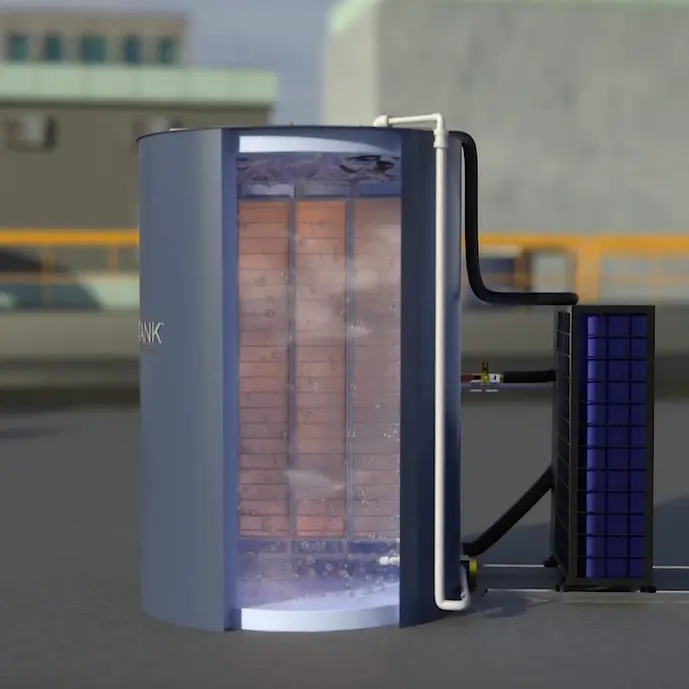
If the answer to either is yes, a heat pump paired with a thermal storage tank can offer a major financial advantage. With storage, you can run the heat pump when rates are low and avoid operating it during expensive peak periods. The energy is then banked as hot water in a well-insulated tank and used as needed.
Compared to electric tankless systems—whose power draw is extremely high during operation—this strategy can reduce monthly bills by up to 90%, especially for commercial users.
And if you plan to generate your own power using solar photovoltaics, you gain even more flexibility. In that scenario, your economics depend on installation costs and the avoided cost of purchased electricity.
Talk to our experts about your energy situation today.
4. Should You Consider Wood or Biomass Systems?
Wood isn’t often discussed alongside modern heat pumps, but in some rural areas or commercial applications, it’s still a viable option. While you are technically “burning something,” wood is considered renewable because trees regrow, making it closer to carbon neutral.
The key with wood-based systems is maintaining consistent, full-power operation. They don’t perform well when frequently cycling on and off. Here again, thermal storage can make all the difference. By pairing a boiler or furnace with a properly sized storage tank, you can run the equipment efficiently and use the stored hot water when needed.
5. Ask the Right Questions and Run the Numbers
Whether you’re a homeowner or managing a facility like a hotel, hospital, laundry, brewery, or care center, evaluating your options starts with four essential questions:
- What system are you using today to heat your water?
- What are you paying for energy today?
- How much could you save by switching to another technology?
- What are the upfront and ongoing maintenance costs of each option?
Talk to our experts about your energy situation today.
About the Author

Dr Oliver Buechse
Oliver is a McKinsey-trained strategist with deep expertise in Digital Transformation and Climate Change Impacts. Diverse background in Banking, Government, and Non-profit. PhD in Economic Psychology.