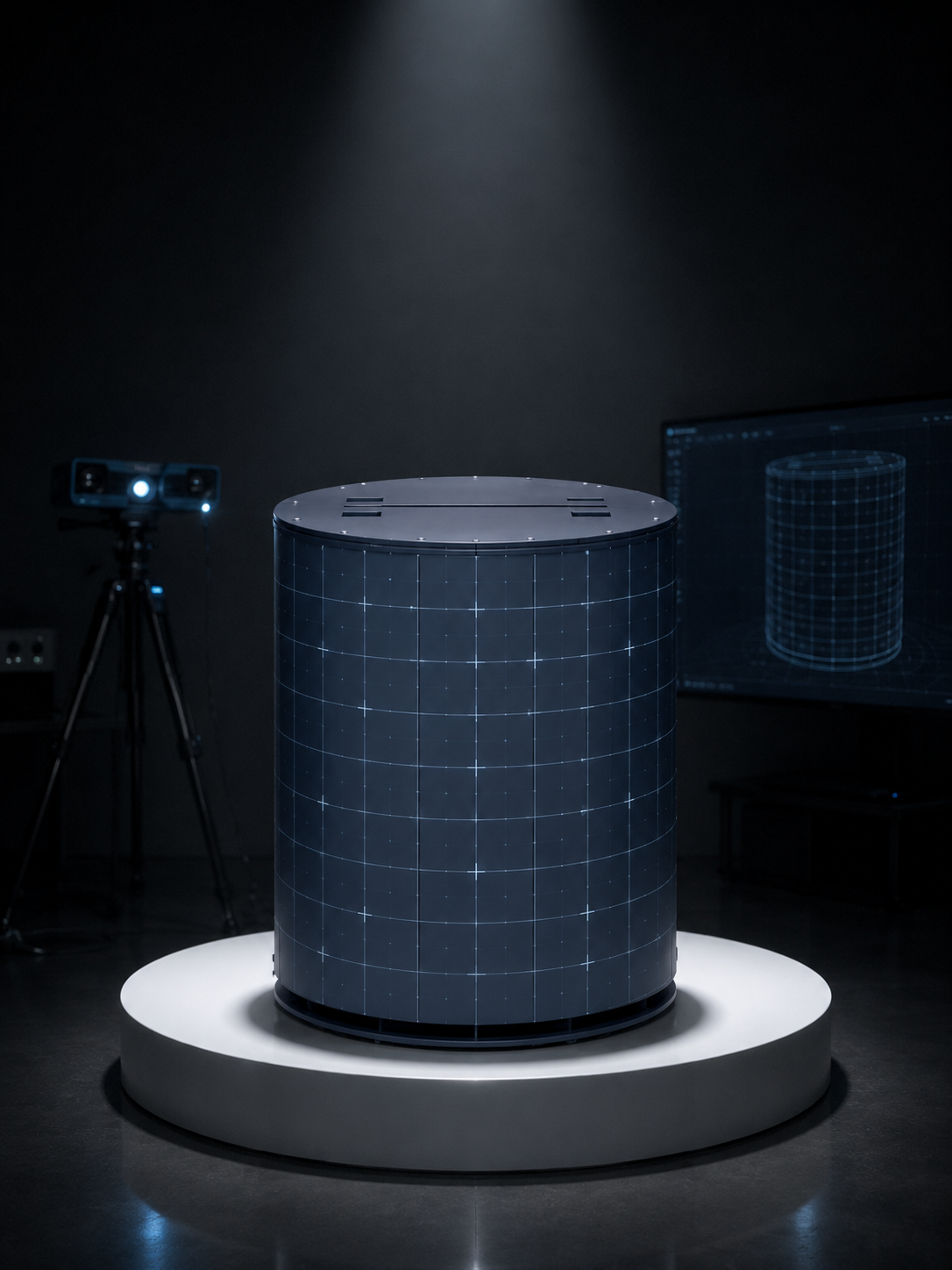
The best thermal energy tank is not the biggest tank, the cheapest tank, or the tank with the highest nameplate volume. It is the tank that matches the building’s load profile, operating temperature, available space, installation path, standby-loss tolerance, installed cost, and future expansion plans.
Key Takeaways
Thermal storage is often described in gallons, but buyers are really purchasing the ability to shift heat through time. A tank charges when heat is available and discharges when the building needs it. That makes the tank’s usable energy, losses, operating limits, and connection to the rest of the system more important than volume alone.
A technically attractive tank can still be a poor project choice if it cannot fit through the building, exceeds floor-loading limits, loses too much heat during standby, or cannot integrate cleanly with the heat source and distribution system. The comparison should therefore begin with the building’s operating requirements rather than with a preferred tank type.
Best depends on the job
A tank serving a small building with a short daily load shift has a different ideal specification from a tank supporting a large commercial or industrial load. The first project may favor a compact, readily available water-heating product. The second may need a purpose-built storage vessel, modular installation, or a specialty technology that can handle unusual temperature or space requirements.
The load profile is the starting point. Determine when heat is available, when it is required, how long the storage period lasts, and how much of the tank’s nominal capacity can actually be used. Then compare that requirement against the tank’s temperature range, standby loss, connection size, controls, and physical constraints.
Installed cost also changes the answer. A low equipment price may not remain low after rigging, structural work, piping, insulation, controls, commissioning, and access modifications are included. A higher-cost tank can be the better value if it reduces installation complexity, fits the available space, or provides a clearer path to expansion.
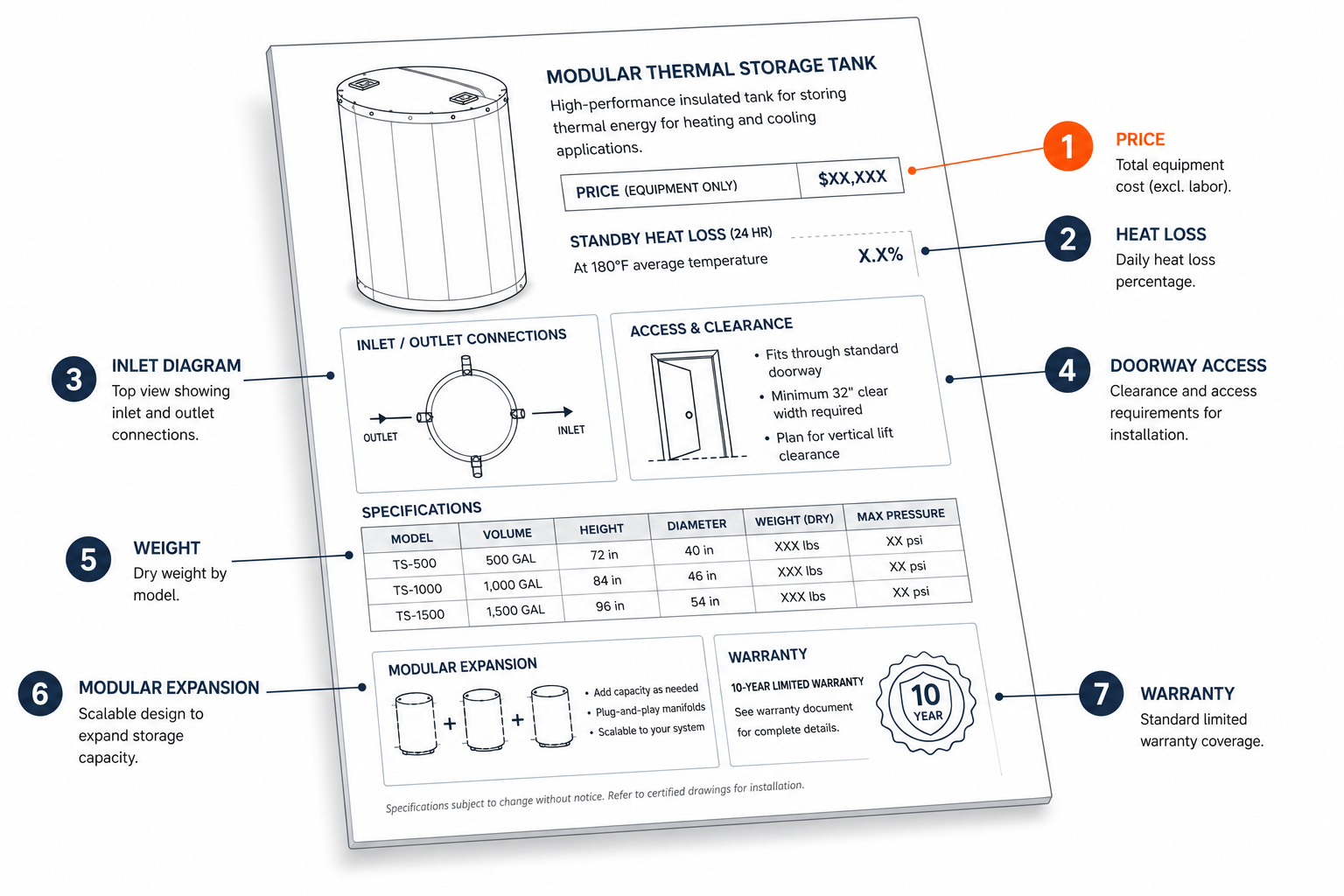

The four construction types
Thermal energy tanks are not one product category. Construction type affects capacity, temperature capability, installation method, serviceability, and cost. The following four groups cover the main approaches buyers are likely to encounter.
Welded steel tanks are purpose-built vessels commonly used when a project needs substantial capacity, custom dimensions, or robust commercial service. They can be designed around a specific volume, connection arrangement, insulation package, and operating requirement. Their tradeoffs can include fabrication lead time, transportation, rigging, site welding or assembly, and the need to account carefully for corrosion protection and maintenance.
Glass-lined or conventional water heaters are familiar, widely available options for smaller systems and applications that align with standard water-heating conditions. They can offer a straightforward procurement and installation path. Their limitations may appear when the project needs unusual temperatures, very large storage volumes, custom geometry, or a duty cycle beyond the intended product application.
Modular or panelized thermal storage tanks are assembled from sections or panels at the project site. This approach can help when a completed vessel cannot pass through existing doors, corridors, elevators, or other access points. Modular construction may also support phased capacity additions, although the buyer should review field assembly, sealing, insulation, structural support, and commissioning requirements.
Phase-change or specialty thermal storage systems store energy through a material or process that differs from conventional sensible water storage. These systems may offer a compact solution, a distinct temperature profile, or a fit for a specialized load. They require closer review of the usable capacity, charge and discharge behavior, controls, service model, material stability, and project-specific economics.
A benchmark sheet to judge any tank against
A simple benchmark sheet helps separate a useful comparison from a volume-only comparison. Thermal Energy HQ benchmark points include an 80-gallon tank with 12.0 kWh at $1,190, a 350-gallon tank with 54.6 kWh at $3,427, a 500-gallon tank with 77.0 kWh at $4,464, and a 700-gallon tank with 108.0 kWh at $5,798.
These figures provide reference points for capacity and equipment price, not a universal price list or a complete installed-cost estimate. The buyer should confirm the assumptions behind each number, including operating temperatures, usable energy, insulation, controls, delivery, installation, and site conditions.
The benchmark also illustrates why scale should be evaluated carefully. As tank size increases, standing loss can improve on a relative basis. That does not automatically make a larger tank the correct choice: the project still has to support the filled weight, footprint, access route, piping, controls, and capital cost.
For each candidate, record nominal volume, usable kWh, standing loss, temperature limits, stratification features, empty and filled weight, footprint, access method, connection requirements, controls compatibility, equipment cost, and expected installed cost. Add the cost and difficulty of future expansion if the load is expected to grow.
Questions that expose a weak spec sheet
A strong supplier conversation should move beyond nominal volume and a product brochure. Ask questions that reveal the conditions behind the performance claims and the work required to make the tank operate as intended.
The incentive footnote
Thermal storage may qualify for incentives in some jurisdictions or programs, but eligibility is not automatic. Rules can depend on technology, project type, location, efficiency, control strategy, utility requirements, installation date, and whether the program recognizes the tank as part of a broader heating or demand-management system.
Treat incentives as a qualified project input rather than as a guaranteed reduction in cost. Confirm current requirements with the applicable utility, agency, or program administrator before using an incentive in the financial model. Keep the base-case comparison clear even if the incentive is delayed, reduced, or unavailable.
Frequently Asked Questions
Is a larger thermal energy tank always better?
No. A larger tank can provide more usable energy and may have better relative standing-loss performance, but it also increases filled weight, footprint, access requirements, piping, and capital cost. The correct size is the one that matches the required load shift and the building’s physical and financial constraints.
How many gallons of storage does a building need?
Gallons alone do not answer the question. Required volume depends on usable kWh, the operating temperature range, the load profile, the charge and discharge schedule, and how much stratification the system can preserve. Size the tank from the required delivered energy, then verify the resulting volume and installation requirements.
Are conventional water heaters suitable for thermal energy storage?
They can be suitable for smaller or standard-temperature applications when their capacity, duty cycle, controls, and connection requirements align with the project. They may be less suitable when the system needs large capacity, custom geometry, unusual temperatures, or specialized integration.
When should a buyer consider a modular or panelized tank?
Modular construction is worth considering when a completed vessel cannot pass through the available access route, when site assembly is preferable, or when future expansion is important. Review field assembly, sealing, insulation, structural support, commissioning, and service requirements before selecting it.
What is the most important tank specification?
There is no single specification that decides every project. Usable kWh is often the best starting point, but standing loss, temperature range, stratification, access, floor loading, footprint, and system integration can eliminate a candidate even when its capacity is adequate.
How should thermal tank prices be compared?
Compare equipment price separately from installed cost, then include delivery, rigging, structural work, piping, insulation, controls, commissioning, and future expansion. A lower tank price does not necessarily produce a lower project cost.
Conclusion
The best thermal energy tank is the one that delivers the required usable energy with acceptable losses, fits the operating temperature range, preserves useful stratification, can be installed safely, and integrates with the complete heating system.
Start with the building’s load profile and constraints. Then compare the four construction types using the seven deciding specifications and a consistent benchmark sheet. That process produces a more defensible choice than selecting by gallons, purchase price, or a generic claim that one tank type is best for every job.