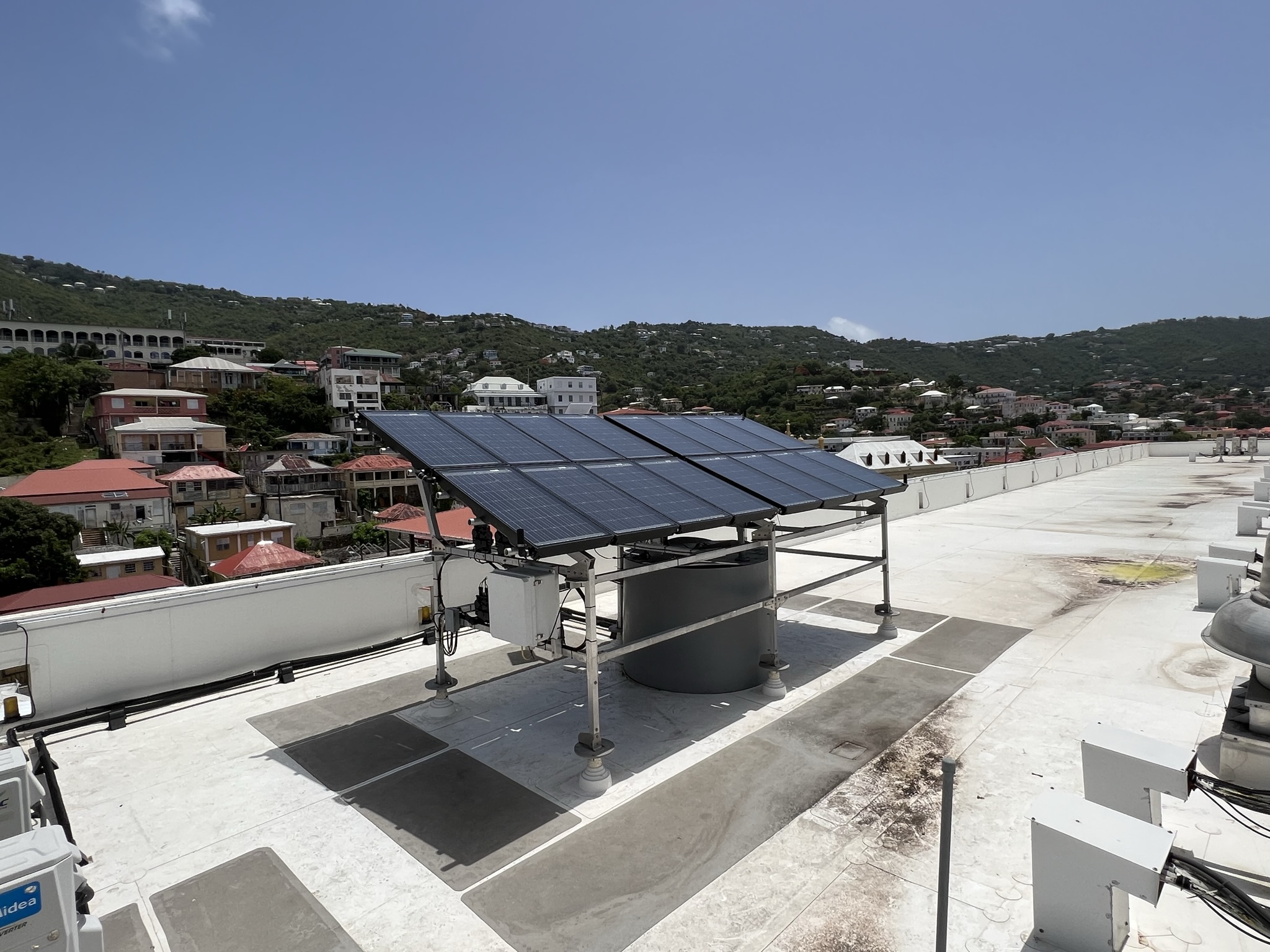
Commercial hot water thermal storage gives building owners and facility managers a way to separate hot water production from the exact moment of demand, helping equipment operate more strategically while maintaining service for occupants.
Key Takeaways
- Thermal storage adds a buffer between hot water generation and end-use demand, reducing the need to match production to every short-term peak.
- Heat pump water heaters can use storage to operate during favorable periods while stored hot water serves later demand.
- Successful designs depend on accurate load profiles, usable storage volume, temperature management, recovery capacity, and control logic.
- Storage can improve equipment scheduling and resilience, but it does not eliminate the need for proper distribution, recirculation, mixing, or safety controls.
- A complete evaluation should consider space, water quality, operating temperatures, backup capability, controls, maintenance, and the building’s demand pattern.
Commercial buildings often experience hot water demand that is concentrated into specific periods rather than evenly distributed throughout the day. Hotels, multifamily properties, hospitals, schools, fitness centers, restaurants, and industrial facilities may all see sharp changes in demand based on occupancy, schedules, processes, or cleaning requirements. When generation equipment must respond directly to every peak, the system may require substantial capacity that remains lightly used during other periods.
Commercial hot water thermal storage changes that operating relationship. Instead of producing all hot water at the moment it is needed, the system generates and stores thermal energy for later use. This article explains how storage works, how it interacts with commercial water heating equipment, where it can improve operating flexibility, and which design and implementation issues deserve close attention.
How Thermal Storage Supports Commercial Water Heating
A thermal storage system uses a tank or other storage medium to hold usable heat until the building needs it. In a hot water application, water is heated by a boiler, electric resistance heater, heat pump water heater, heat recovery system, or another source, then retained in an insulated vessel. When fixtures or processes call for hot water, the stored volume helps meet the load without requiring the heat source to provide the entire demand instantly.
The storage tank does not create energy; it changes when energy is produced and when it is delivered. This distinction is important when evaluating performance. A storage system can reduce the required instantaneous generation rate, make equipment operation more consistent, and provide a buffer for short-term demand changes. It also introduces standby losses, tank space requirements, and additional controls, so the design must match the building’s actual operating needs.
- Heat source: Produces thermal energy for immediate use or storage.
- Storage vessel: Holds heated water and makes it available during later demand.
- Distribution system: Delivers hot water through supply and recirculation piping.
- Controls: Coordinate generation, storage temperature, demand, backup operation, and safety functions.
Why Hot Water Demand Profiles Matter
The value of storage depends heavily on when and how hot water is used. A building with a relatively steady load may gain less from shifting production than a facility with clear periods of high demand and low demand. For example, a property may have predictable morning peaks, a restaurant may have concentrated cleaning and preparation loads, and a fitness facility may experience demand linked to class schedules and occupancy.
Designers should review demand as a time-based profile rather than relying only on a daily volume estimate. Peak duration matters because a short, intense event requires a different balance of storage and recovery capacity than a long, sustained load. Existing meter data, equipment run time, occupancy schedules, fixture use, process requirements, and operator observations can all help establish a more realistic profile.
A useful assessment also distinguishes between simultaneous demand and coincident demand. Not every fixture or process operates at full flow at the same time, and assumptions that are too conservative can result in oversized equipment and storage. Conversely, ignoring unusual but operationally important events can leave the system unable to maintain temperature or pressure when it matters most.
- Identify daily and weekly demand patterns.
- Separate short peaks from sustained high-load periods.
- Review seasonal, occupancy-related, and process-related changes.
- Confirm the required delivery temperature and acceptable recovery time.
- Use measured operating information when it is available.
Commercial Hot Water Thermal Storage and Heat Pump Water Heaters
Heat pump water heaters move heat from a surrounding air or water source into the domestic hot water system. Because their heat output is typically delivered at a different rate and timing than the building’s peak demand, storage can provide an important operating buffer. The heat pump can run for longer periods at a controlled rate while the tank supplies hot water during demand events.
This arrangement is particularly relevant when the heat pump water heater is scheduled to operate during periods that align with building controls, electrical system capacity, renewable generation, or other operating objectives. The design still needs to account for source temperature, entering water temperature, compressor operating limits, recovery time, and the required stored water temperature. Storage should support the heat pump’s operating characteristics rather than conceal a mismatch between equipment capacity and the actual load.
A backup heat source may be included where the facility requires additional recovery capability or continuity during unusual demand. Backup equipment can be staged based on tank temperature, predicted demand, or a defined operating condition. The control sequence should make clear when the primary heat pump operates, when backup heat is enabled, and how the system returns to normal operation.
- Use storage to separate heat pump operation from short-term demand peaks.
- Coordinate tank temperature targets with heat pump capabilities and water safety practices.
- Define backup operation for unusual demand, maintenance, or equipment unavailability.
- Check whether the available electrical service and heat source can support the intended schedule.
Hot Water Load Shifting and Operating Flexibility
Hot water load shifting means producing and storing thermal energy at one time so it can serve demand at another. In commercial water heating, this can reduce the need for heat-producing equipment to follow rapid changes in fixture use. The approach may also allow equipment to operate during planned periods when building conditions or energy management objectives are more favorable, provided the resulting schedule is compatible with occupant needs and system requirements.
Load shifting is not simply a matter of heating a tank whenever demand is low. The controls must maintain enough usable capacity for the next expected demand period while avoiding unnecessary heating and excessive standby time. A forward-looking sequence may use time schedules, tank temperature, return temperature, demand signals, and available equipment capacity. More advanced systems can also use forecasts, but the basic control logic must remain understandable to operators.
The building’s load pattern determines how much flexibility is available. A tank that is fully reheated too early may lose heat before use, while a tank that is held too close to its minimum operating temperature may leave little margin for an unexpected peak. The best operating strategy balances readiness, efficiency, equipment cycling, and service reliability.
- Charge storage before predictable demand periods.
- Reserve sufficient capacity for unplanned or extended demand.
- Avoid unnecessary reheating that increases standby losses.
- Use tank temperature and system demand as operating feedback.
- Provide clear alarms and operator visibility for low storage or recovery conditions.
Sizing Storage, Recovery Capacity, and Distribution Equipment
Storage volume and heat-source capacity must be evaluated together. A larger tank can cover a longer demand event, but it also takes more time and energy to recharge and requires additional space. A smaller tank may work when the heat source has strong recovery capacity or when the load is brief and predictable. The design objective is not to maximize storage; it is to provide the required hot water service with an appropriate combination of stored volume and recovery.
Sizing should consider the usable temperature range, not just the tank’s nameplate volume. The available hot water depends on stored temperature, incoming cold water temperature, mixing valve settings, draw profile, and the temperature at which the heat source can recover the tank. Stratification may affect how much hot water is immediately available, while mixing and circulation can alter actual delivery conditions.
Distribution design remains essential. A storage tank cannot correct undersized supply piping, poorly balanced recirculation, excessive pressure drop, or inadequate insulation. Long runs may require careful recirculation design to maintain service without creating unnecessary heat loss. Designers should also verify that fixtures and connected processes can receive the intended temperature and flow under both normal and peak conditions.
- Evaluate storage volume and recovery rate as one system.
- Base calculations on usable temperature difference and real demand timing.
- Account for cold-water temperature, mixing, stratification, and standby losses.
- Check supply piping, recirculation, insulation, pressure, and fixture performance.
- Include space for access, service, expansion, drains, and required safety components.
Temperature Management, Safety, and Water Quality
Commercial hot water systems must balance energy management with safe and reliable water service. Storage temperature, distribution temperature, mixing valve operation, recirculation temperature, and fixture-level requirements should be considered together. A tank setpoint that appears favorable for storage may create a different risk or operating condition at the fixtures, while an aggressive reduction in temperature may limit usable capacity and recovery flexibility.
Controls should prevent unsafe delivery temperatures and respond appropriately to sensor failure, abnormal tank conditions, loss of circulation, or equipment faults. Temperature sensors need suitable placement and calibration because a single sensor may not represent the entire tank. The system should also account for expansion, pressure relief, drain connections, isolation valves, and service access in accordance with the applicable design and safety requirements.
Water quality can affect heat exchangers, tanks, valves, and recirculation components. Scale, corrosion, sediment, and changing water chemistry may reduce heat transfer or interfere with controls. Maintenance planning should identify inspection points, sacrificial components where used, filters or strainers, valves, sensors, and procedures for cleaning or draining equipment.
- Coordinate storage temperature with distribution and mixing controls.
- Provide temperature monitoring at locations that represent actual system conditions.
- Plan for pressure relief, thermal expansion, drainage, isolation, and service access.
- Consider local water quality and its effect on heat-transfer surfaces and valves.
- Document alarm responses and temperature-control sequences for operators.
Controls and Integration With Building Systems
A thermal storage system performs best when its controls reflect the building’s priorities. At a minimum, the sequence should coordinate heat-source operation, tank temperature, recirculation, demand, backup heat, and high-temperature protection. Integration with a building automation system can improve visibility by showing temperatures, equipment status, alarms, and trends, but integration should not replace local safety controls or a clear standalone operating sequence.
Control logic should define normal charging, discharge response, recovery, and fault conditions. For example, a tank may begin charging when its upper or lower temperature sensor reaches a defined limit, then stop when the required storage condition is restored. The sequence may also limit simultaneous operation, protect heat pumps from unsuitable conditions, and enable backup equipment only when the primary source cannot recover the tank within the required period.
Commissioning is especially important because storage systems can appear to operate normally while failing to deliver the intended flexibility. Trend data can reveal short cycling, excessive recirculation losses, premature backup operation, poor sensor placement, or a schedule that does not match actual occupancy. Operators should receive practical documentation explaining what each setpoint does and how the system responds to abnormal conditions.
- Define charge, discharge, recovery, and backup sequences before installation.
- Trend tank temperatures, source operation, recirculation, and alarms.
- Keep safety functions independent of higher-level building automation commands.
- Test sensors, valves, interlocks, and backup operation during commissioning.
- Provide operator instructions that explain normal and abnormal conditions.
Assessing Benefits and Tradeoffs Before Installation
Thermal storage can provide several operational benefits, but those benefits should be evaluated against the complete system cost and complexity. Potential advantages include reduced instantaneous heat-source capacity, improved compatibility with heat pump water heaters, more stable equipment operation, and greater flexibility in scheduling. The effect depends on the building’s demand profile, source efficiency, storage losses, electrical and mechanical constraints, and the quality of the control strategy.
Storage also introduces tradeoffs. Tanks require floor area, structural consideration, piping, valves, insulation, and maintenance access. Larger stored volumes may increase standby losses and extend recovery time. Additional controls and sensors create more commissioning and maintenance requirements. If the system is poorly sized or operated, the tank may provide little useful load shifting while still adding capital and operational complexity.
A sound evaluation compares alternatives on a consistent basis. Options might include direct generation, additional heat-source capacity, multiple smaller units, storage paired with heat pumps, or a hybrid configuration. The comparison should include service reliability, maintainability, space, operating temperatures, backup requirements, controls, and the building’s expected future use rather than focusing on equipment size alone.
- Compare storage with direct-generation and hybrid system alternatives.
- Include space, structural, piping, controls, maintenance, and standby-loss considerations.
- Evaluate reliability during peak demand and equipment downtime.
- Consider changes in occupancy, schedules, and future hot water demand.
- Use lifecycle analysis without assuming a particular utility rate, incentive, or payback period.
Frequently Asked Questions
What is commercial hot water thermal storage?
Commercial hot water thermal storage is a system that heats water in advance and holds it in an insulated tank for later use. It separates the timing of heat production from the timing of hot water demand and can be paired with heat pumps, boilers, electric heaters, heat recovery systems, or other heat sources.
Can thermal storage reduce the size of a commercial water heater?
It can reduce the instantaneous generation capacity needed in some applications, but the result depends on peak duration, storage volume, recovery rate, temperature requirements, and backup capacity. Storage should be sized with the heat source and distribution system rather than treated as a standalone replacement for capacity analysis.
How do heat pump water heaters work with storage tanks?
A heat pump water heater can operate at a controlled rate to charge a storage tank, while the tank supplies hot water during periods when demand exceeds the heat pump’s immediate output. The design must account for source conditions, recovery time, tank temperature, controls, and any required backup heat.
Does hot water load shifting work in every commercial building?
No. It is most useful when demand has predictable peaks, when the heat source can operate at a different time than the load, or when the building benefits from additional operating flexibility. Buildings with highly continuous and uniform demand may have less opportunity to shift production, although storage may still serve as a buffer or backup resource.
What maintenance does a thermal storage water-heating system require?
Maintenance may include inspection of tanks, valves, sensors, mixing devices, recirculation equipment, heat exchangers, relief components, insulation, and water-quality controls. The exact tasks depend on the equipment and water conditions. Operators should follow the system design documents and applicable manufacturer and facility maintenance procedures.
Conclusion
Commercial hot water thermal storage is best understood as a system-design tool that manages timing, not as a standalone efficiency measure. Its value comes from matching stored capacity, heat-source recovery, distribution performance, temperature control, and building demand. When those elements are coordinated, storage can support more flexible commercial water heating and improve the way equipment responds to changing loads.
The strongest designs begin with an accurate demand profile and continue through careful sizing, control sequencing, commissioning, and maintenance planning. Facility teams should evaluate hot water load shifting alongside space, safety, water quality, backup needs, and long-term operating conditions so the final system delivers dependable service without adding unnecessary complexity.