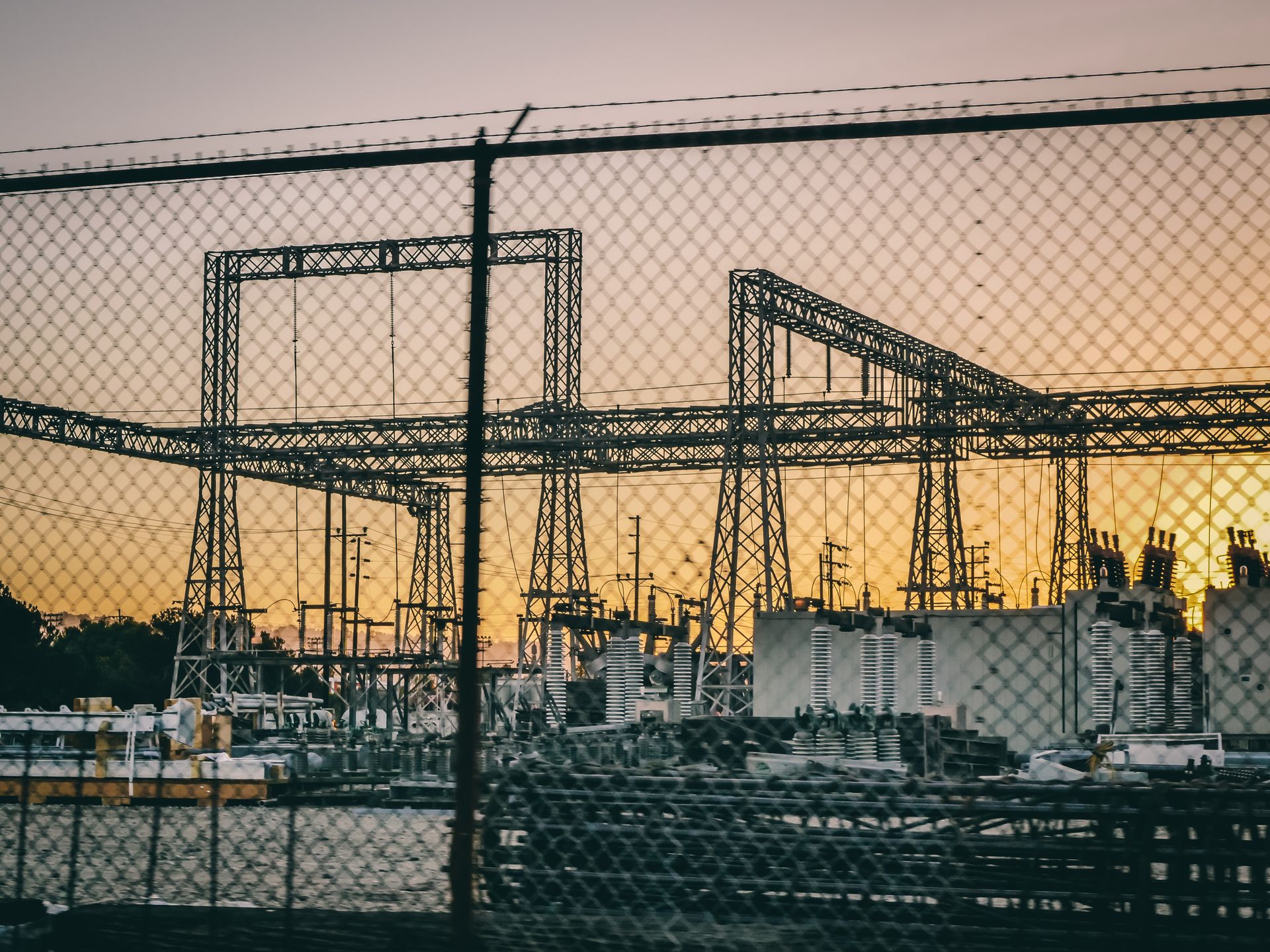
Thermal energy storage grid stability strategies help commercial buildings shift heating and cooling electricity use away from constrained periods while preserving indoor comfort and operational performance.
Electric grids must continuously balance supply and demand, but the balance is becoming more complex. Commercial buildings contribute significantly to changing electrical demand because heating, ventilation, and air-conditioning systems respond to weather, occupancy, schedules, and internal loads. On hot afternoons or during other system stress periods, many buildings increase electricity use at the same time, creating challenges for grid operators and higher demand exposure for building owners.
Thermal energy storage provides a way to manage this relationship by producing and storing useful heating or cooling at one time and using it later. Instead of treating HVAC demand as fixed, facility teams can use available thermal capacity as an operational resource. This article explains how thermal energy storage grid stability applications work, how they support load balancing and demand response, and what owners and engineers should evaluate before selecting a system or control strategy.
Why Grid Stability Depends on Flexible Building Loads
Grid stability requires generation, transmission, distribution, and customer demand to remain in balance. When demand changes quickly or available supply is constrained, system operators may need to call on flexible resources. Large commercial buildings can participate in this process because their HVAC loads are substantial, scheduled, and often capable of short-term adjustment without affecting essential operations.
Traditional demand management often focuses on reducing equipment output during a critical period. That approach can work, but it may create comfort issues, interrupt processes, or require equipment to operate at inefficient conditions. Thermal storage adds another option: the building can prepare in advance by charging stored thermal capacity and then reduce or delay electrical consumption when the grid needs flexibility.
The value of a flexible load depends on more than its connected equipment capacity. Operators need to know how quickly the load can change, how long the change can persist, how often it can occur, and what conditions must be restored afterward. These characteristics determine whether a building can provide useful grid support rather than only occasional peak reduction.
- Grid support depends on timing, duration, response speed, and recovery requirements.
- HVAC flexibility must be measured against comfort and process constraints.
- Thermal storage can shift energy use instead of relying only on curtailment.
How Thermal Energy Storage Grid Stability Strategies Work
Thermal storage systems charge by creating a stored supply of cooling or heating that can be used later. Depending on the design, storage may involve chilled water, ice, phase-change materials, hot water, or other media. During discharge, the stored thermal energy serves part or all of the building load, allowing chillers, heat pumps, boilers, or related equipment to run at a lower level or remain off for a defined period.
The electrical benefit comes from changing when equipment operates. A building may charge storage during periods when electrical demand is lower, then discharge during a hot afternoon, a system contingency, or another grid event. The storage does not eliminate the building’s thermal requirement; it changes the timing of the electricity used to meet that requirement.
This distinction is important when assessing performance. A storage system can reduce a building’s contribution to a system peak, but it still requires energy to charge and may increase operation during another period. The overall value depends on the charging schedule, storage losses, equipment efficiency, tariff structure, weather, and the grid service being pursued.
- Charge periods create stored thermal capacity before a grid event.
- Discharge periods reduce or delay electric equipment operation.
- The system shifts thermal production rather than removing the underlying building load.
Load Balancing and Peak Demand Reduction
Load balancing is the practice of shaping electrical demand so that it better matches available grid capacity and operating conditions. Thermal storage supports this by moving HVAC-related demand away from periods when many customers are using electricity simultaneously. The building becomes less dependent on immediate equipment output at the exact moment the grid is most constrained.
Peak demand reduction requires careful coordination. If storage is discharged too early, it may be depleted before the critical period. If it is held too long, the building may miss an opportunity to reduce demand. Controls should account for weather forecasts, occupancy, equipment status, expected event duration, and the amount of thermal capacity remaining.
The effect on the building’s electrical profile should be evaluated at the appropriate interval for the applicable utility or grid program. A system may appear to reduce instantaneous power while having less effect on the demand measurement used for billing or grid dispatch. Engineers should model both the thermal profile and the electrical measurement methodology before estimating results.
- Forecast building load and weather before deciding when to charge or discharge.
- Maintain sufficient storage for the expected duration of a peak period.
- Evaluate performance using the same demand intervals used by the relevant program or tariff.
- Include charging energy, standby losses, and post-event recovery in the analysis.
Demand Response Without Sacrificing Building Operations
Demand response allows a building to change electricity use in response to a price signal, grid condition, operator request, or preplanned schedule. Thermal storage can make that response more predictable because the facility has a defined source of cooling or heating that can temporarily replace normal equipment operation.
A practical demand response sequence may begin with a preconditioning or charging period. The system then receives an event signal, transitions to discharge, and adjusts HVAC equipment while monitoring supply temperatures, zone conditions, and storage state of charge. When the event ends, controls restore normal operation in a controlled manner rather than turning every device back on at once.
Not every building can respond in the same way. Hospitals, laboratories, manufacturing areas, data rooms, and facilities with strict humidity or process requirements may have limited flexibility. A successful strategy identifies noncritical loads, establishes operating boundaries, and gives facility staff visibility into the sequence. Manual override capability is also important when comfort, safety, or process conditions take priority.
- Define event triggers, operating limits, and restoration procedures in advance.
- Use zone conditions and storage state of charge as control safeguards.
- Avoid rebound demand by sequencing equipment after an event.
- Coordinate automated response with facility operating procedures.
Grid Flexibility Through Controls and System Integration
Thermal storage is not automatically flexible simply because it contains stored energy. Flexibility depends on controls that can measure conditions, interpret signals, and make timely decisions. The control architecture may need to connect the energy management system, chiller or heat pump controls, pumps, valves, temperature sensors, meters, and utility or aggregator communication channels.
A useful control strategy tracks the storage state of charge in thermal terms and, where needed, in expected electrical discharge capability. It should also understand current building load, equipment efficiency, weather conditions, and the time required to change operating modes. Without these inputs, a schedule may call for discharge when the storage is unavailable or charge when the electrical system is already constrained.
Integration should be tested under normal operation and abnormal conditions. Engineers and controls contractors should verify sensor accuracy, command priority, communications reliability, alarm behavior, and fallback modes. The system should continue to protect comfort and equipment if a grid signal is delayed, a meter is unavailable, or a storage component cannot operate as expected.
- Connect storage controls with HVAC, metering, and building automation systems.
- Track both thermal capacity and the electrical effect of operating decisions.
- Establish fallback control modes for communication or equipment failures.
- Test event sequences before relying on automated grid response.
Coordinating Thermal Storage With Onsite Energy Resources
Thermal storage can complement onsite solar, batteries, generators, and other energy resources, but the control objective should be clearly defined. For example, a building may charge thermal storage when solar production is available and discharge it later when solar output declines. In another case, the priority may be reducing grid import during a constrained interval or preserving battery capacity for critical electrical loads.
Thermal and electrical storage serve different functions. A battery can provide electrical power directly, while thermal storage serves heating or cooling demand. Using the appropriate resource for each load can reduce unnecessary conversion steps and preserve battery capacity for applications that cannot be served thermally. The best operating sequence depends on equipment efficiency, electrical limits, building load, and resilience priorities.
Coordination also requires attention to competing objectives. Charging thermal storage may increase electrical demand at a time when a battery is being reserved for backup. Conversely, discharging thermal storage may reduce HVAC electricity use but require additional pumping or auxiliary equipment. A supervisory control strategy should rank objectives and define what happens when they conflict.
- Use thermal storage for thermal loads and reserve electrical storage for loads that require electricity directly.
- Coordinate charging with onsite generation, electrical limits, and resilience plans.
- Define priority rules when cost, grid response, comfort, and backup objectives conflict.
Design Factors That Determine Real-World Performance
The right storage design begins with the building load, not with a preferred technology. Engineers should examine hourly or shorter-interval cooling and heating demand, equipment sequencing, operating schedules, available space, distribution temperatures, and electrical capacity. The analysis should distinguish between a consistent base load and short-duration peaks because they create different storage requirements.
Storage capacity and discharge power are separate design variables. Capacity describes how much thermal energy can be delivered over time, while discharge capability describes how quickly it can serve the load. A system with substantial capacity may not reduce a short, high electrical peak if its connected equipment and controls cannot deliver enough thermal output during the relevant interval.
Physical and operational constraints also matter. Available room, structural loading, water treatment, insulation, maintenance access, pump head, noise, freeze protection, and integration with existing HVAC equipment can affect feasibility. The design should account for partial-load efficiency and the building’s ability to operate through transitions, not just rated equipment performance.
- Start with measured building load and equipment operating data.
- Size both thermal capacity and discharge rate for the intended service.
- Review space, structural, hydraulic, electrical, and maintenance constraints.
- Model part-load operation and transition periods.
Measuring Performance and Managing Operational Risk
A grid-support project needs a measurement plan that separates expected performance from assumptions. Useful measurements may include building electrical demand, HVAC equipment power, storage temperatures, flow rates, supply and return conditions, zone conditions, and event timestamps. These data help determine whether the system delivered the planned thermal and electrical response.
Performance should be reviewed across different weather and occupancy conditions. A storage system may respond well during a moderate day but have less available capacity during an extreme condition when the building load is already high. Monitoring can reveal whether the system is charging fully, discharging as expected, or recovering in a way that creates an undesirable demand rebound.
Operational risk should be managed through limits and procedures. Facility teams need clear rules for minimum comfort conditions, critical loads, equipment lockouts, emergency operation, and manual intervention. Regular commissioning and review are especially important when the storage system is connected to automated demand response or multiple energy resources.
- Measure both electrical response and thermal service delivered.
- Compare performance under changing weather, occupancy, and operating schedules.
- Set clear comfort, process, equipment, and recovery limits.
- Review event data to improve schedules and control sequences.
Evaluating the Business Case and Grid Service Options
The business case for thermal storage should include more than a simple comparison of equipment costs. Owners may evaluate demand charges, energy prices, demand response compensation where available, resilience value, equipment replacement timing, maintenance, controls integration, and the cost of required electrical or mechanical upgrades. Because these factors vary by location and building, project analysis should use site-specific data rather than generic assumptions.
The selected grid service also influences design. A system intended mainly for daily peak demand reduction may use a predictable schedule, while a system intended for event-based response may need spare capacity, faster controls, and reliable communications. If the building participates in a third-party program, the owner should understand dispatch authority, measurement rules, event obligations, testing, and any penalties or limitations before committing.
A phased approach can reduce uncertainty. The facility may begin with monitoring and control improvements, then test a limited storage schedule, and finally expand automated participation if the building demonstrates sufficient flexibility. This process helps identify operational constraints before they affect comfort or critical processes.
- Use site-specific load, equipment, tariff, and operating data.
- Match storage design to the intended grid service and event requirements.
- Include controls, maintenance, commissioning, and operational labor in the evaluation.
- Consider phased implementation when building data or flexibility is uncertain.
Frequently Asked Questions
What is the relationship between thermal energy storage and grid stability?
Thermal energy storage supports grid stability by allowing a building to produce heating or cooling at one time and use it later. This can reduce or shift electrical demand during periods when the grid is constrained, helping align building consumption with available system capacity.
Can thermal storage provide demand response in any commercial building?
Not every building has the same amount of flexible load. Suitability depends on HVAC configuration, storage capacity, operating schedules, comfort requirements, process loads, controls, and the duration and timing of expected events. Buildings with strict environmental or production requirements may need narrower operating limits.
Does thermal energy storage reduce total energy use?
Thermal storage primarily changes when energy is used rather than automatically reducing total consumption. Total energy performance depends on charging and discharging efficiency, equipment operating conditions, storage losses, pumping, controls, and whether the system enables more efficient equipment operation.
How does thermal storage help with peak demand reduction?
The system charges before a high-demand period and discharges stored cooling or heating during that period. This allows chillers, heat pumps, boilers, or related equipment to operate at a lower level, provided the storage has enough capacity and discharge power for the required duration.
What controls are needed for grid-responsive thermal storage?
Controls typically need access to building demand, storage conditions, HVAC equipment status, temperature sensors, schedules, and external grid or utility signals when applicable. They should include safeguards for comfort, critical loads, communications failures, equipment limits, and orderly recovery after an event.
How should an owner evaluate a thermal storage project?
An evaluation should combine measured load data with a review of storage capacity, discharge rate, space, equipment integration, controls, maintenance, operating constraints, and the intended grid service. The analysis should also account for charging energy, recovery periods, electrical infrastructure, and site-specific program or tariff conditions.
Conclusion
Thermal energy storage grid stability applications give commercial buildings a practical way to make HVAC demand more flexible. By charging and discharging at deliberate times, storage can support load balancing, demand response, and peak demand reduction while maintaining the thermal conditions required by occupants and processes.
The strongest projects are designed around measured building loads, clear operating priorities, reliable controls, and realistic event requirements. Owners and engineers should evaluate thermal capacity, discharge power, integration, comfort limits, maintenance, and business objectives together so grid flexibility becomes a dependable operating capability rather than an isolated equipment feature.