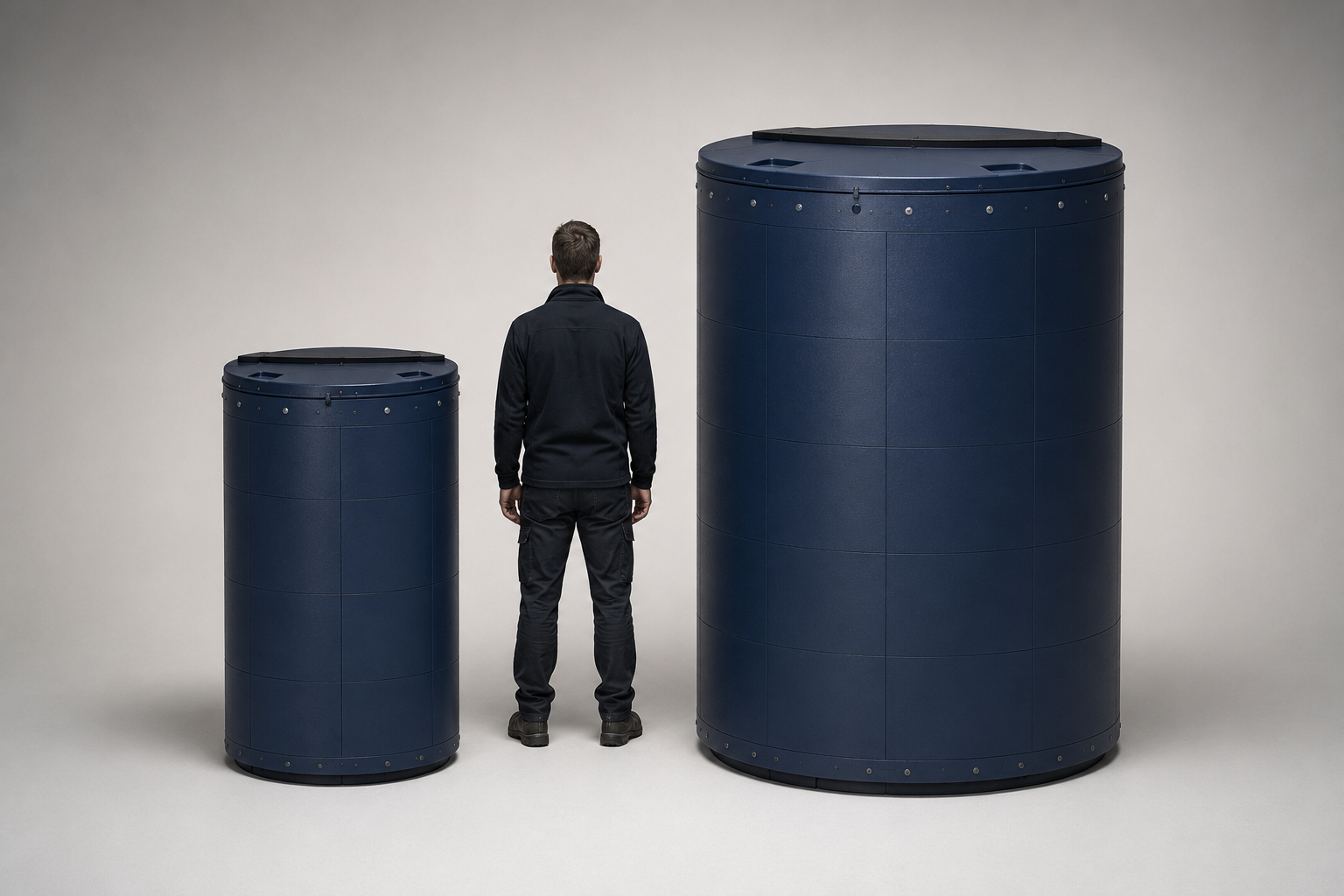
Thermal Energy HQ modular thermal energy storage tank list prices range from $1,190 to $5,798. Depending on tank size, that works out to about $54 to $97 per stored kWh. The tank itself is only one part of a complete thermal storage system, so the final installed cost will also depend on the heat source, heat exchangers, piping, controls, labor, electrical work, and site conditions.
Key Takeaways
The most useful starting point for a thermal energy storage budget is to separate the storage vessel from the rest of the system. A tank stores thermal energy, while the broader installation may include equipment that produces, transfers, controls, distributes, and uses that energy.
The prices below are modular tank list prices. They are useful for comparing tank sizes and storage capacity, but they should not be treated as a complete project quote.
Thermal energy storage tank prices
The modular tank price range is $1,190 to $5,798. The larger tanks provide more storage capacity and a lower price per stored kWh.
Standing loss also decreases as tank size increases in the listed examples. Standing loss is shown as the temperature loss over 24 hours.
What drives the price per tank
Tank size is the clearest pricing factor in this list. As capacity increases from 12.0 kWh to 108.0 kWh, the list price rises, but the price per stored kWh falls from about $97 to about $54.
Capacity is not the only useful comparison. Standing loss also matters when evaluating how a tank will perform over a 24-hour period. The listed tanks range from 7-8°F of standing loss for the 80-gallon model to 2.4°F for the 700-gallon model.
The right tank is therefore a balance between required storage capacity, physical space, operating needs, and the broader system design. A lower tank price does not automatically mean a lower total project cost if the selected capacity does not match the application.
Tank price vs. installed-system cost
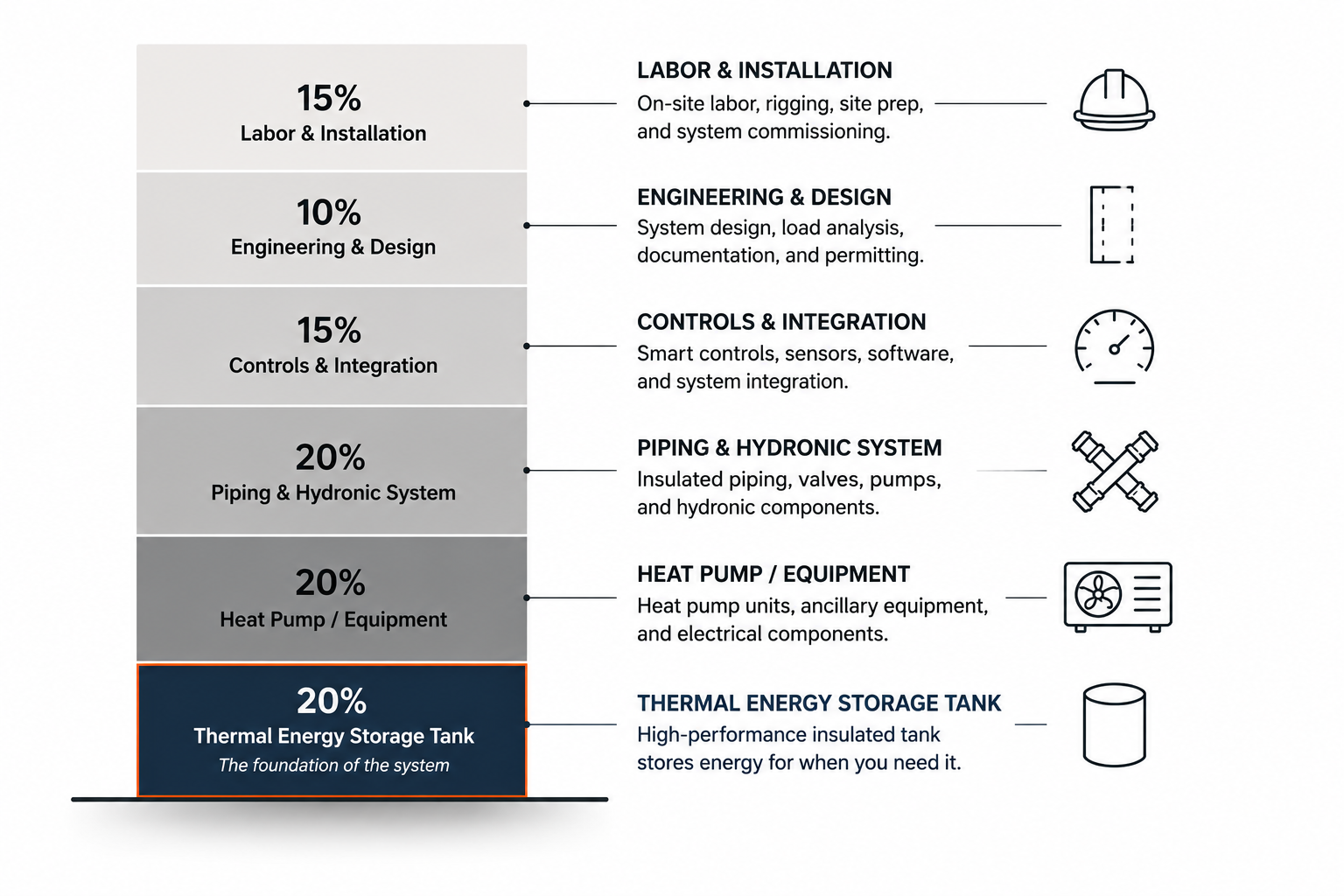
A tank list price covers the storage vessel. A complete installed thermal energy storage system adds the equipment and work required to make that vessel operate as part of a functioning installation.
Depending on the project, the installed-system budget may include the heat source, heat exchangers, piping, controls, labor, electrical work, and site conditions. These costs can vary substantially from one installation to another.
For that reason, the tank price should be used as a component-level starting point rather than a final installed quote. Two projects using the same tank may have different total costs because their heat sources, piping runs, controls, labor requirements, electrical needs, or site conditions differ.
How thermal storage cost compares to battery storage
Thermal energy storage and battery storage should not be treated as direct equivalents. A thermal storage tank stores heat, while a battery stores electrical energy. Their equipment, applications, operating requirements, and system boundaries are different.
A comparison based only on dollars per kWh can therefore be misleading. The result depends on whether the calculation uses stored thermal energy or electrical energy, whether it includes only the storage device or the complete installed system, and what service the system is intended to provide.
The thermal tank figures in this guide are tank-level list prices measured against stored thermal energy. They should not be presented as a direct like-for-like comparison with a complete battery energy storage system.
Worked example
Suppose a project begins with a 500-gallon modular tank. The listed tank price is $4,464, the listed storage capacity is 77.0 kWh, and the calculated price is about $58 per stored kWh. The listed standing loss is 3.0°F per 24 hours.
That $4,464 figure is the tank component, not the installed project total. To create a complete budget, the project team would add the heat source, heat exchangers, piping, controls, labor, electrical work, and any site-specific requirements.
If the project instead requires the largest listed option, the 700-gallon tank provides 108.0 kWh for a $5,798 list price, or about $54 per stored kWh. This illustrates how the larger listed tanks reduce the tank-level cost per stored kWh, while the final choice still depends on the application's storage requirement and installation conditions.

What lowers net cost
Net cost may be lower than the initial equipment and installation budget when a project qualifies for applicable incentives. Potential sources include federal programs, state programs, and utility incentives.
Incentive rules, eligible equipment, application requirements, timing, and funding availability can vary. Confirm current requirements with the relevant federal agency, state program, or utility before including an incentive in the project budget.
A sound budget should show the gross tank and installed-system costs separately from any expected incentive. This makes it easier to see both the project cost before incentives and the potential net cost after qualifying support.
Frequently Asked Questions
How much does a thermal energy storage tank cost?
Thermal Energy HQ modular tank list prices range from $1,190 to $5,798 across the listed 80-, 350-, 500-, and 700-gallon models.
What is the cost per stored kWh?
The listed tanks range from about $97 per stored kWh for the 80-gallon model to about $54 per stored kWh for the 700-gallon model.
Does the tank price include installation?
No. The list price is for the storage vessel. A complete installed-system budget also needs to account for the heat source, heat exchangers, piping, controls, labor, electrical work, and site conditions.
Which listed tank has the lowest price per stored kWh?
The 700-gallon tank has the lowest listed tank-level cost at about $54 per stored kWh. It lists at $5,798 and stores 108.0 kWh.
How does thermal storage compare with batteries?
Thermal storage and batteries are different technologies that store different forms of energy. A comparison should use the same cost boundary and clearly distinguish stored thermal energy from stored electrical energy rather than treating the systems as direct equivalents.
Are incentives available for thermal energy storage?
Federal, state, and utility incentives may be available for qualifying projects. Availability, eligibility, and application requirements vary, so confirm current rules with the relevant program or utility.
Conclusion
For 2026 budgeting, the key tank-level figure is $1,190 to $5,798, with approximately $54 to $97 per stored kWh across the listed modular sizes. Select the tank based on the required capacity and application, then build the full budget around the equipment and work needed to install and operate the system.
The tank is the starting point—not the complete project price.