Every building and industrial facility runs on two kinds of energy: electricity and heat. Electricity gets the attention, but heat is where the money quietly goes—space heating alone accounted for nearly one-third of all energy consumed in U.S. commercial buildings in the most recent federal survey, and in manufacturing, process heat is the single largest source of energy use in the industrial sector. “Thermal generation services” is the umbrella term for how that heat gets made and delivered—and the term means two very different things depending on who is selling it. The federal commercial buildings survey documents the space-heating share, while the Department of Energy explains industrial process heat and its role in manufacturing.
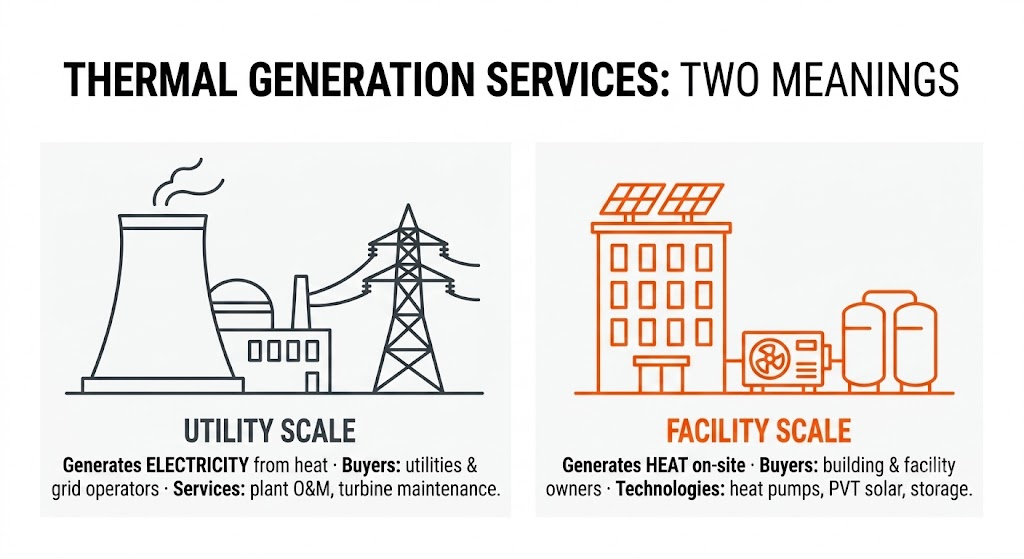
In short: Thermal generation services fall into two categories. At utility scale, the term refers to operations, maintenance, and engineering services for thermal power plants—gas, steam, and combined-cycle facilities that generate electricity from heat. At facility scale, it refers to generating thermal energy on-site at a building or plant: heat pumps, solar thermal and photovoltaic-thermal (PVT) collectors, waste heat recovery, and electric heating, almost always paired with thermal energy storage so a small generation plant can meet large peak demands. This guide covers the facility-scale category—the one that determines what a building owner, developer, or operator actually pays for hot water, space heating, and process heat.
In this article
Thermal generation services are the technologies, engineering, and operating services used to produce usable thermal energy—hot water, steam, hot air, or process heat—either at power plant scale or at the scale of an individual building or facility. The U.S. Energy Information Administration classifies solar thermal energy systems that heat water, air, and building interiors as a distinct generation category from photovoltaics, and the Department of Energy defines industrial process heat as the use of thermal energy to produce, treat, or alter manufactured goods. In every case the pattern is the same: a heat source generates thermal energy, a transfer medium, usually water, carries it, and a load consumes it.
The confusion in the term comes from the electricity industry, where “thermal generation” has long meant generating electricity from heat—gas turbines, steam cycles, and nuclear. If you operate a power station, thermal generation services means turbine overhauls and plant O&M. If you operate a hotel, an apartment building, a laundromat, a food processing plant, or a farm, it means something more direct: how your facility makes its own heat, and who designs, installs, and services the system that does it.
Utility-scale thermal generation compared with facility-scale thermal generation
CategoryUtility-scale thermal generationFacility-scale thermal generation
What is generatedElectricity, from heat (gas, steam, combined cycle, nuclear)Usable heat: hot water, space heating, process heat
Typical buyerUtilities, independent power producers, grid operatorsBuilding owners, developers, facility and plant managers
Typical servicesPlant O&M, turbine maintenance, performance engineering, decommissioningSystem design, equipment supply, installation, monitoring, heat-as-a-service contracts
ScaleTens of MW to GWTens of kW to a few MW thermal
Where this article focusesContext onlyFull guide below
Four generation technologies cover nearly every facility-scale thermal project, and most well-designed systems combine at least two of them.
A heat pump uses electricity to move ambient heat rather than create it, which is why it delivers two to four units of heat per unit of electricity consumed. In central hot water plants, commercial heat pumps have become the default electrification measure—the U.S. Department of Energy's Better Buildings program identifies pairing heat generation with thermal storage to lower peak demand and shift load to cheaper periods as the strongest configuration in buildings with time-varying electric rates.
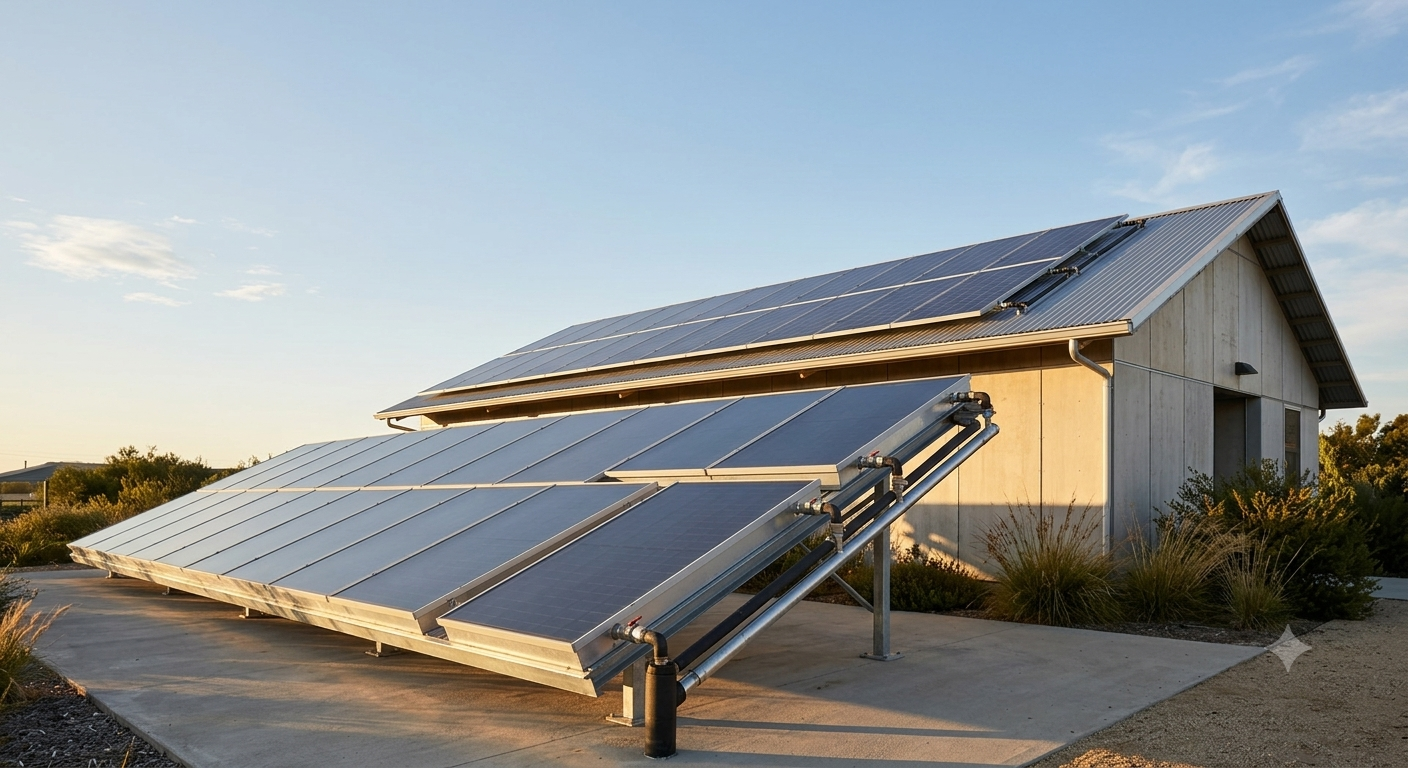
Solar thermal collectors convert sunlight directly to heat; the EIA's overview of solar thermal collector types covers the flat-plate and evacuated-tube families used for building hot water. Hybrid photovoltaic-thermal (PVT) panels go a step further, producing electricity and capturing the heat that a standard PV panel wastes. Thermal Energy HQ's patented PowerPanel PVT converts captured solar energy into roughly four parts thermal and one part electrical output, making a roof do double duty—see the PowerPanel PVT specifications. Federal guidance on system types, sizing, and codes is maintained on the DOE's solar water heaters resource, and Pacific Northwest National Laboratory publishes operations and maintenance best practices for solar water heating systems, which put typical O&M at 0.5–2% of initial cost per year.
Electric elements are the cheapest generation hardware and the most expensive heat per kWh—which makes them ideal as backup and terrible as a primary source. A storage-first design keeps resistance heating in reserve, and an existing boiler that is not at end-of-life can stay in place as contingency rather than being scrapped.
Facilities that reject heat—refrigeration racks, wastewater, and compressor discharge—can recapture it through desuperheaters and exchangers. The DOE's Industrial Decarbonization Roadmap names better utilization of waste heat among the principal levers for cutting industrial process heating emissions, which account for roughly 30% of manufacturing's total.
Sizing a heat source to meet a building's single worst peak—the 7 a.m. shower draw in a 100-unit building or the morning wash-down at a food plant—forces a large, expensive, heavily cycled machine. Insulated storage breaks that constraint: a smaller heat pump or solar array generates steadily during off-peak or solar hours, tanks bank the output, and stored hot water carries the peaks. The DOE Better Buildings thermal energy storage fact sheet identifies peak demand reduction, load shifting, and cost-effective electrification as the core TES value case.
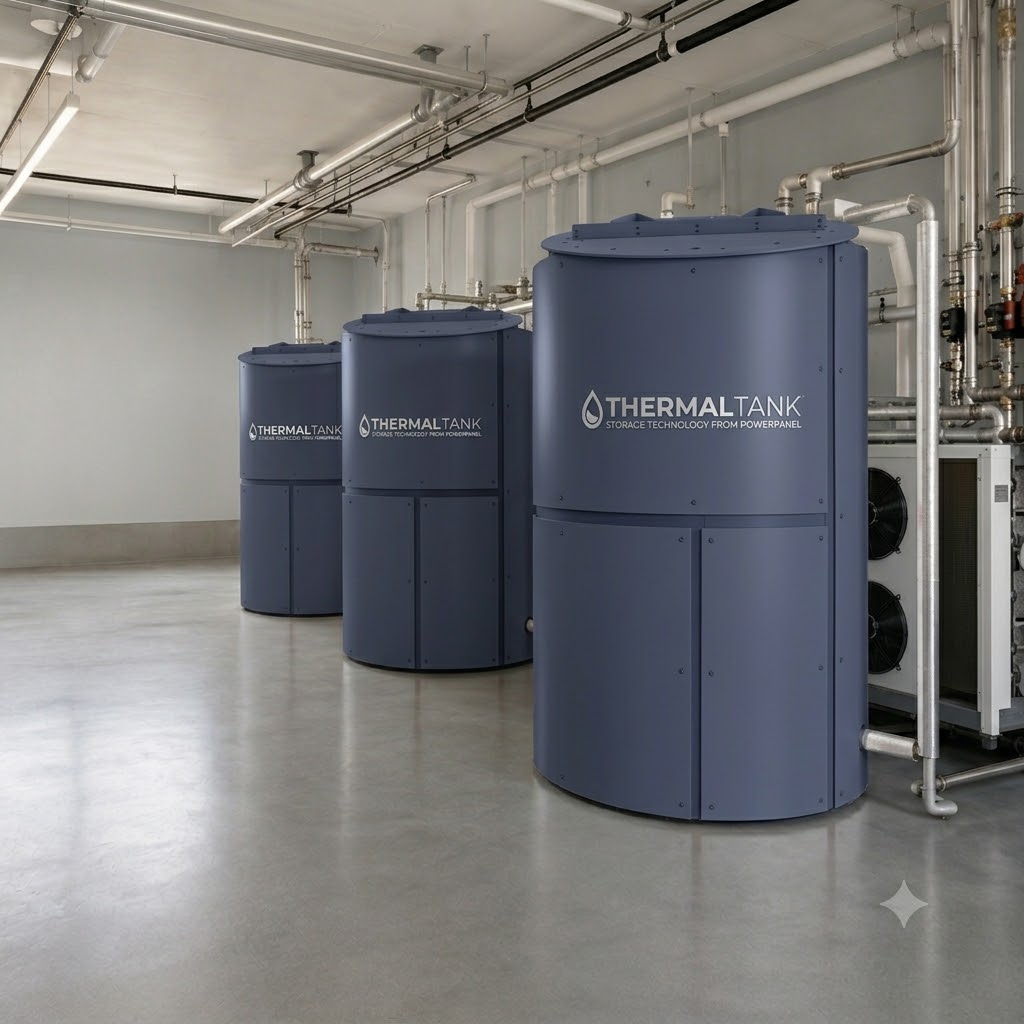
Thermal Energy HQ's modular thermal storage tank design and specifications are engineered for the retrofit reality of occupied buildings. The patented panelized design passes through standard doorways, assembles inside mechanical rooms where a welded, crane-set tank could never go, and scales by adding modules as loads grow.
The storage layer is the most transparent part of the budget. A modular thermal energy storage tank costs between roughly $1,200 and $5,800 per tank at list price, depending on capacity—equivalent to $54–$97 per kWh of thermal storage. A complete installed system adds the generation source, such as a heat pump, PVT array, or electric elements, along with heat exchangers, piping, controls, and labor, which vary by site.
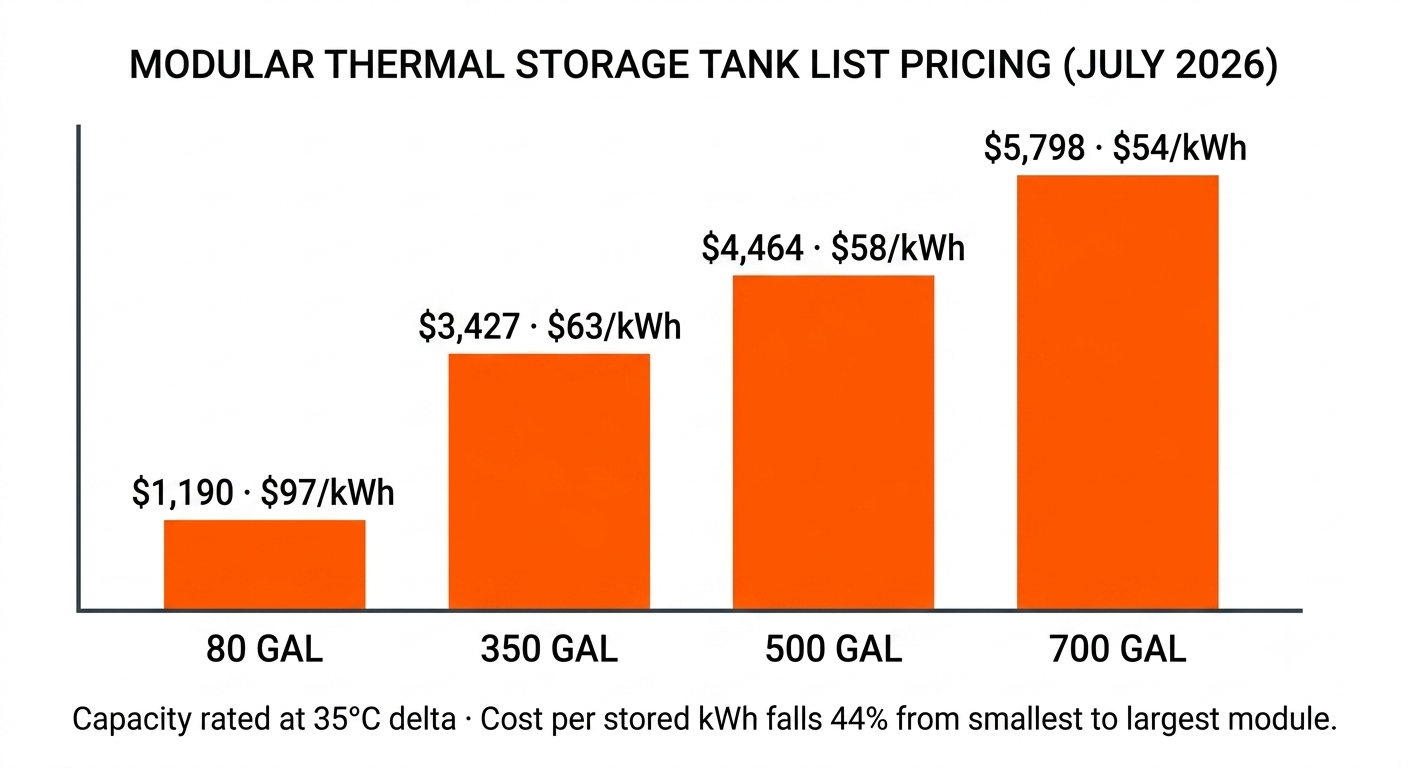
Modular thermal storage tank list pricing, July 2026
ModelList price$/kWh storedStorage capacityStanding loss
80 gallon$1,190$9712.0 kWh7–8°F / 24 hr
350 gallon$3,427$6354.6 kWh3.8°F / 24 hr
500 gallon$4,464$5877.0 kWh3.0°F / 24 hr
700 gallon$5,798$54108.0 kWh2.4°F / 24 hr
Facility-scale thermal generation is sold under two commercial models. Under ownership, the facility buys the equipment, captures the incentives, and keeps every dollar of operating savings—the model that fits owners with capital budgets and long hold periods. Under heat as a service (HaaS), a third party finances, builds, and operates the system and the facility pays for the heat it consumes, as the Renewable Thermal Collaborative defines the model. This removes upfront cost in exchange for a long-term contract.
HaaS structures can wrap any of the generation technologies above, including thermal storage, industrial heat pumps, and solar thermal. The right answer is a finance question, not an engineering one: the system architecture is the same, and a well-scoped design keeps both options open. Thermal Energy HQ supports both paths—equipment supply with engineering support for owners, and system design for service-model partners—built around the same thermal energy solution sets.
Incentive availability depends on configuration and tax position, so treat this as a map, not tax advice.
The federal investment credit regime covers energy storage technology placed in service after December 31, 2024, through the Clean Electricity Investment Credit, and the statutory definition of energy storage technology explicitly includes thermal energy storage under 26 U.S.C. §48E. Credit value depends on project size, prevailing wage and apprenticeship compliance, and post-2025 sourcing restrictions—confirm specifics with a tax professional.
State electrification programs can fund the heat pump side of a storage-backed plant—California's Equitable Building Decarbonization Program is the largest current example; see our full guide to the CEC EBD Program for California multifamily projects. Utility custom rebate programs for commercial and multifamily efficiency tied to demand reduction change frequently and should be checked with the utility during design.
The strongest candidates share three traits: large daily hot water or process heat loads, time-varying energy rates, and peaks that are predictable but sharp. In practice that means multifamily housing and hotels, with morning and evening shower peaks; restaurants and commercial laundries, with continuous high-volume draws; healthcare, with reliability-critical loads; and food, beverage, and agricultural operations—a sector where boiler fuel for steam and hot water is a principal industrial energy use and where roughly a third of heat demand sits at temperatures below 100°C, squarely in heat pump and solar thermal range. The EIA describes industrial boiler fuel and steam and hot water use.
For remote and resilience-critical sites, a solar-charged storage plant also shrinks dependence on grid timing. Paired with a PVT array, most or all of a facility's hot water energy can come from on-site solar with the grid as backup—hot-water independence without full electrical islanding.
Thermal generation services are the technologies, engineering, and operating services used to produce usable thermal energy. At utility scale the term refers to operations and maintenance services for thermal power plants that generate electricity from heat. At facility scale it refers to generating heat on-site at a building or plant using heat pumps, solar thermal or PVT collectors, electric heating, and waste heat recovery, usually paired with thermal energy storage.
Generation creates thermal energy—a heat pump, solar collector, or electric element making hot water. Storage banks that energy in insulated tanks so it can be used later. In a well-designed facility system the two are sized together: storage lets a smaller, cheaper generation source run steadily and still meet sharp peaks.
The storage layer lists from $1,190 (80 gallons, 12 kWh) to $5,798 (700 gallons, 108 kWh) per modular tank—roughly $54–$97 per kWh of storage capacity. A complete installed system adds the heat source, heat exchangers, piping, controls, and labor, which vary by site. Federal §48E credits and state or utility programs can reduce net cost for qualifying projects.
Heat as a service is a financing structure in which an energy service provider finances, builds, owns, and operates a thermal system at a facility, and the facility pays for the heat it consumes under a long-term contract instead of buying the equipment. It removes upfront capital cost and transfers operating responsibility to the provider.
Yes. Hybrid photovoltaic-thermal (PVT) panels produce electricity like standard PV while capturing the heat that PV normally wastes, delivering both outputs from the same roof area. The captured heat is typically stored in insulated tanks for hot water and space heating use.
Retrofit is the main market. Modular storage tanks that assemble through standard doorways, heat pumps that fit existing mechanical rooms, and designs that keep an existing boiler as backup are all built for occupied buildings. The constraint in a retrofit is usually access and floor space, which is what modular panelized construction addresses.
Heat is the largest energy load most facilities have and the last one most owners put out to bid. The vendors ranking for “thermal generation services” mostly serve power plants; what a building owner or operator needs is the facility-scale version—a right-sized generation source, a storage layer that lets it stay small, and a commercial structure, ownership or heat-as-a-service, that fits the balance sheet. The fastest way to get real numbers is a short engineering conversation about your building's draw profile.

Tell our team about your building, operating goals, and energy needs.