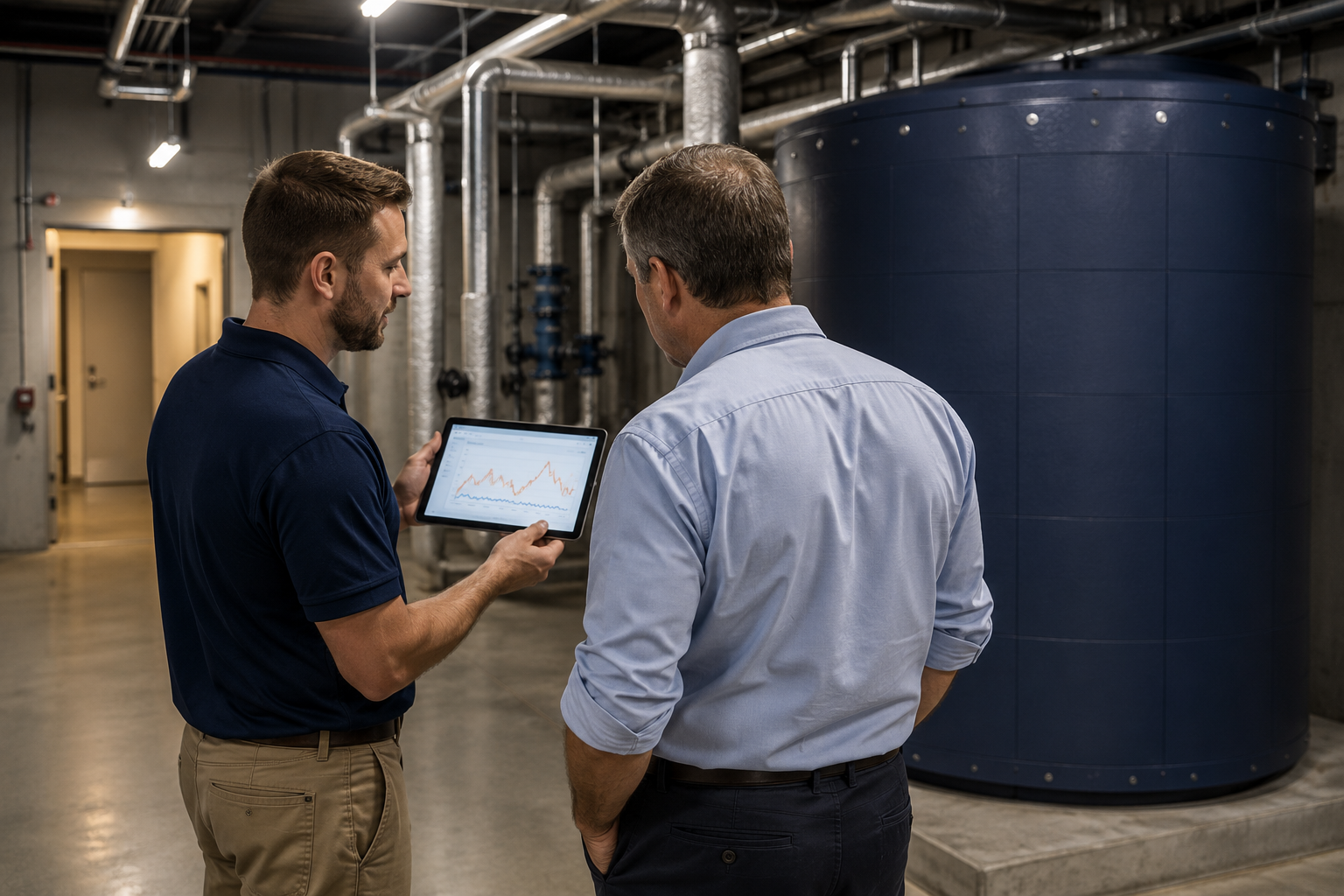
A thermal energy company helps buildings manage heat—not just electricity. Depending on its role, the company may manufacture equipment, integrate a complete system, develop and finance a project, or provide the software and controls that make thermal assets work together.
Key Takeaways
Buildings use energy in several forms, and heat is often one of the largest and most operationally important. Domestic hot water, space heating, process heat, and thermal storage can all affect operating costs, peak demand, comfort, and the ability to use on-site or lower-cost energy.
That is why choosing a thermal energy company requires a different evaluation than choosing an electricity-only provider. The right partner should match the building's heat loads, existing equipment, available installation pathways, controls requirements, and project goals.
What is a thermal energy company?
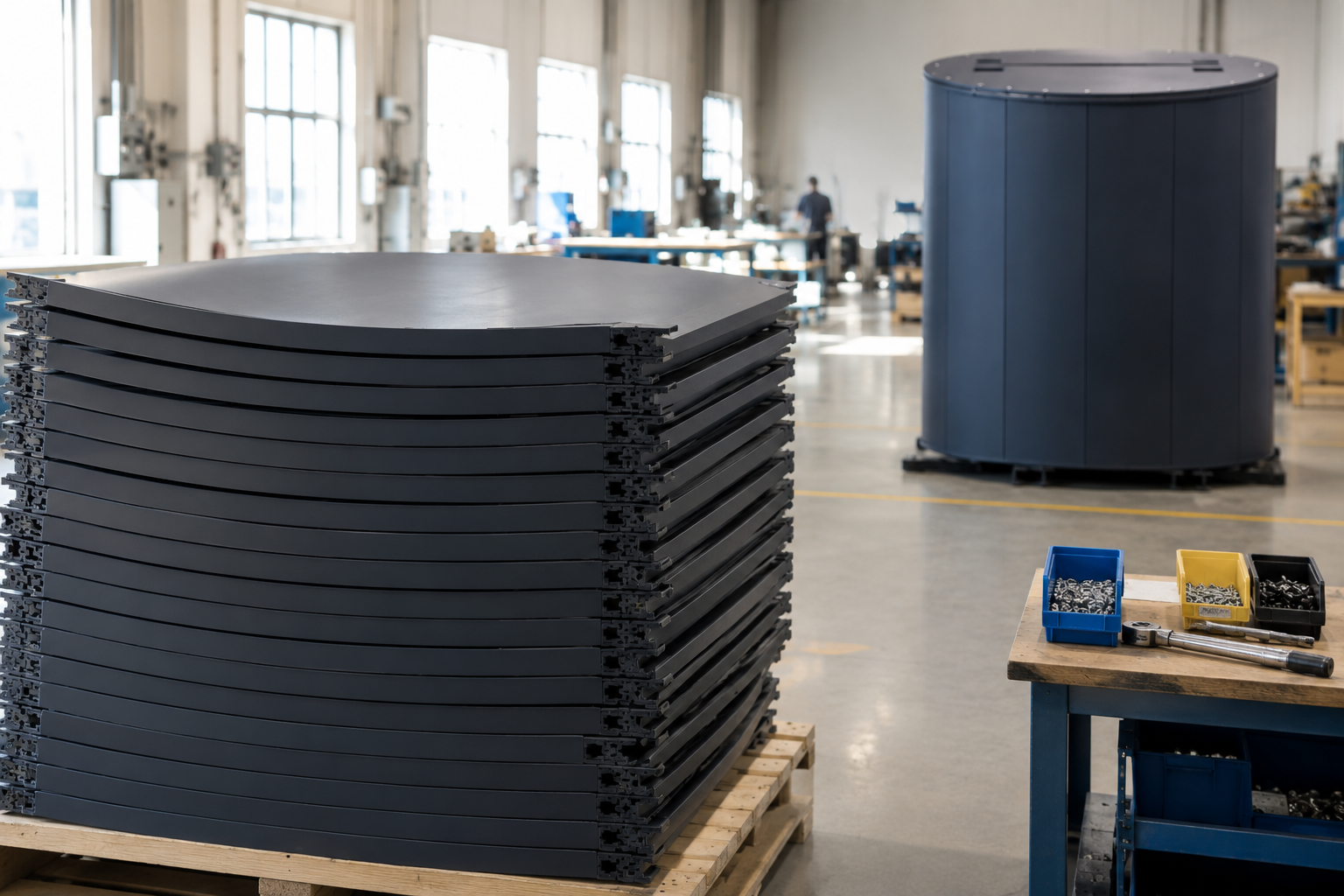
A thermal energy company provides products or services that help a building generate, transfer, store, control, or use heat. Its work may include hot water systems, heat pump integration, thermal storage tanks, solar thermal or photovoltaic-thermal systems, controls, and complete project delivery.
The central distinction is that thermal energy companies manage heat as an energy resource. They can help a building shift when heat is produced, store it for later use, coordinate multiple heat sources, and connect new equipment with existing infrastructure.
Some companies specialize in one component, while others combine equipment, engineering, installation, controls, and project support. Understanding that difference is the first step in comparing providers.
The four types of thermal energy companies
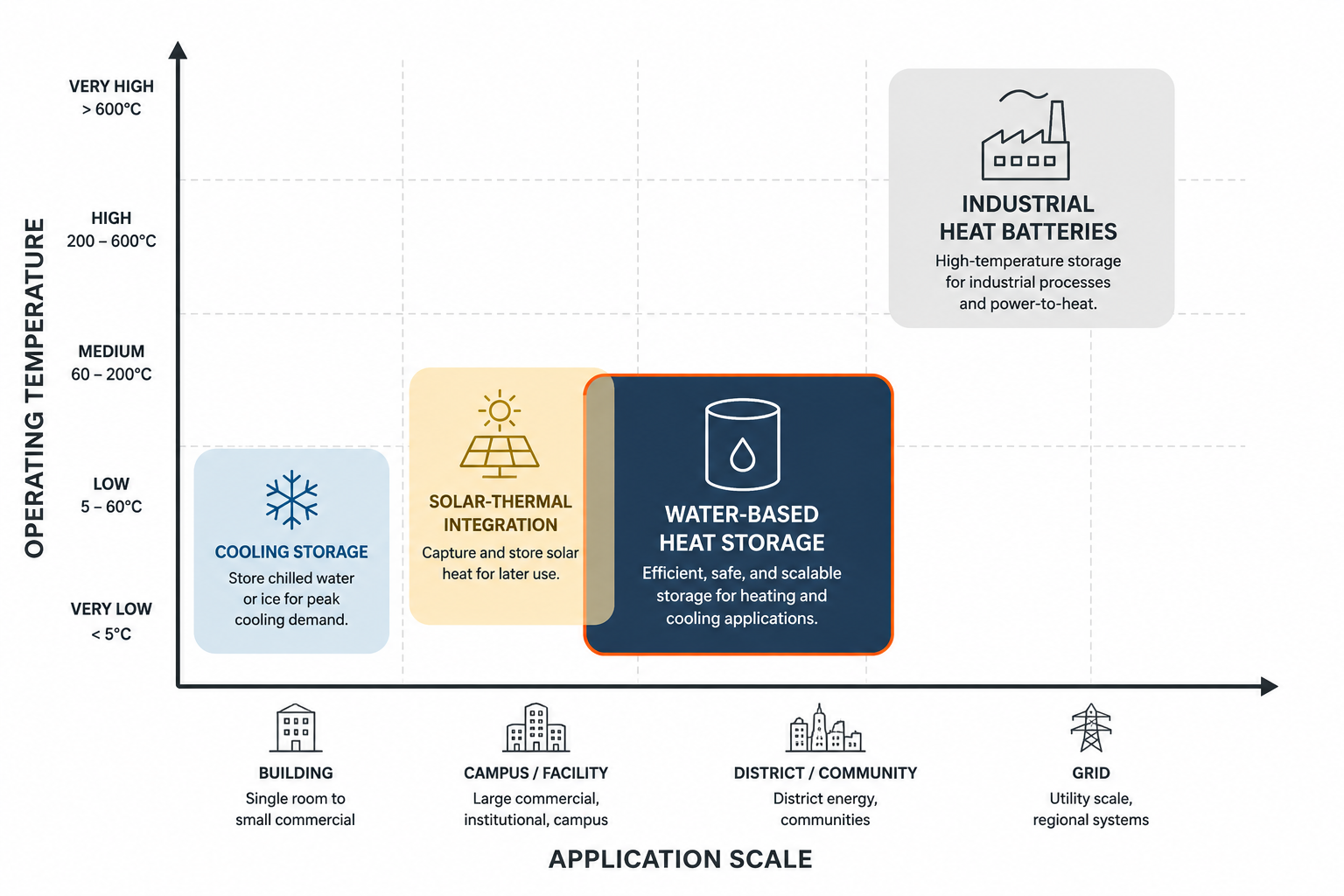
Thermal energy companies generally fall into four categories. The categories can overlap, but each one represents a different role in a project.
Where Thermal Energy HQ fits
Thermal Energy HQ fits as a modular thermal storage and integrated thermal solution provider. Its focus includes tanks, PVT, heat pump integration, hot water, load shifting, and retrofit access.
That positioning is relevant for buyers who need to add or improve thermal capacity without treating the project as an entirely new building system. Modular equipment and integration can help connect thermal storage with available heat sources, existing hot water infrastructure, and building controls.
The company’s role should be considered in the context of the complete project. Buyers should confirm which parts of design, equipment supply, installation coordination, controls, documentation, and commissioning are included for their specific application.
How to evaluate a thermal energy company
A provider should be evaluated on more than a tank or equipment price. The following seven criteria help buyers compare technical fit, project risk, and long-term usefulness.
What do thermal energy systems cost?
Thermal system costs vary according to storage size, equipment selection, project complexity, installation conditions, and the amount of integration required. As an initial equipment reference point, tanks can list from $1,190 to $5,798.
That range describes tanks, not a complete thermal energy system. A functioning project may also require a heat source, heat exchangers, piping, controls, and labor. Depending on the application, the project may also involve engineering, commissioning, documentation, and retrofit work.
For that reason, buyers should avoid comparing providers solely on the list price of a tank. The more useful comparison is the delivered system: how much usable thermal capacity it provides, which heat sources it supports, how it will be controlled, and what installation and project services are included.
A good early cost discussion should identify the building’s thermal loads, desired storage duration, available installation access, existing equipment, and load-shifting objectives. Those factors determine whether a basic component purchase or a more integrated solution is appropriate.
Frequently Asked Questions
What does a thermal energy company do?
A thermal energy company helps buildings generate, transfer, store, control, and use heat. Depending on the company, it may manufacture equipment, integrate systems, develop projects, or provide software and controls.
What are the four types of thermal energy companies?
The four main types are equipment manufacturers, system integrators, project developers or ESCOs, and software or controls companies. Some providers combine more than one role.
How much does a thermal storage tank cost?
Tank list prices can range from $1,190 to $5,798. The final cost of a complete system is higher because it may include a heat source, heat exchangers, piping, controls, and labor.
Is a thermal energy company only for new construction?
No. Retrofit access is an important consideration when evaluating a thermal energy provider. The right solution should account for existing equipment, available installation pathways, and the building’s current mechanical systems.
What should I ask a thermal energy company before buying?
Ask about proven hardware, storage capacity, installation access, heat-source compatibility, controls, incentive and documentation support, and commercial project fit. These criteria help reveal whether the provider can support the complete application.
Where does Thermal Energy HQ fit in the market?
Thermal Energy HQ is positioned as a modular thermal storage and integrated thermal solution provider focused on tanks, PVT, heat pump integration, hot water, load shifting, and retrofit access.
Conclusion
A thermal energy company helps a building manage heat as a practical energy resource. The right provider may supply equipment, integrate a complete system, develop the project, or deliver the controls that coordinate thermal assets.
For buyers, the key is to evaluate the complete fit rather than one product price. Review the hardware, storage capacity, installation pathway, heat-source compatibility, controls, documentation support, and commercial delivery capabilities. With those factors in view, it becomes easier to compare thermal energy companies and choose a solution that supports the building’s real operating needs.