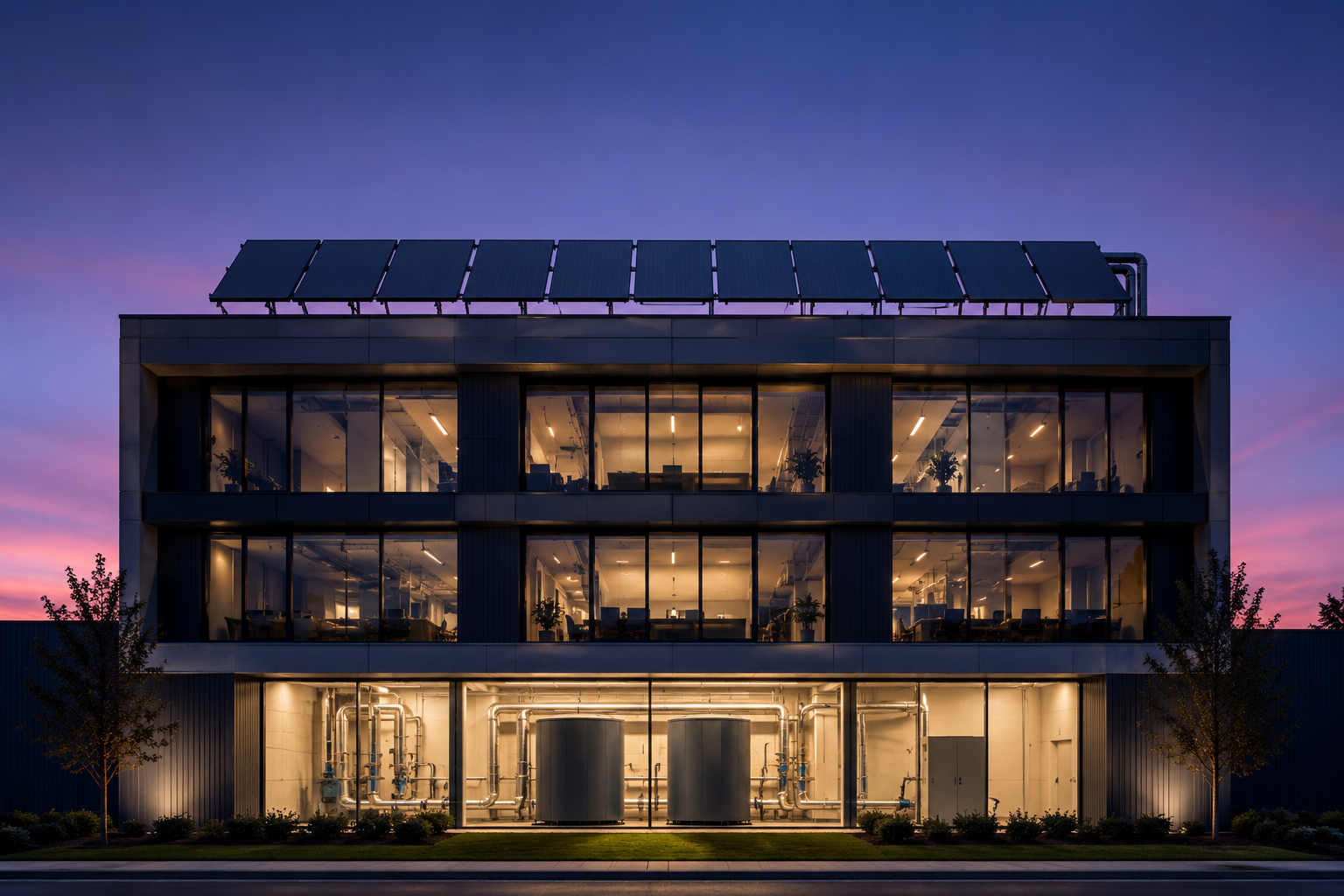
Thermal power can mean electricity generated at utility scale from heat. For commercial facilities, however, it can also mean treating heat as a controllable resource that can be produced, stored, and delivered when it is needed. This guide focuses on the second meaning: facility-scale thermal power solutions for hot water, sanitation, space heating, process heat, and demand reduction.
Key Takeaways
Facilities use thermal energy for more than space heating. Many commercial and industrial sites need reliable hot water, sanitation, process heat, or temperature control. These loads may occur at different times from when energy is available or least expensive.
A thermal power solution connects the source, equipment, storage, and distribution system so heat can be managed as an operational resource. Instead of treating heat as an instantaneous output, the facility can generate or recover it, store it, and dispatch it according to demand.
“Thermal power” has two meanings
In the utility-scale context, thermal power usually refers to electricity produced from heat. A power plant converts heat from sources such as fuel, nuclear reactions, or concentrated solar energy into mechanical energy and then electricity.
In a facility-scale context, thermal power refers to the useful heat capacity available to a building or process. The system may use electricity, solar energy, or recovered heat as its input, but its output is managed thermal energy rather than necessarily electricity.
This distinction matters for commercial buyers. A facility thermal power solution is designed around thermal loads: domestic hot water, sanitation, space heating, process heat, or peak-demand reduction. The objective is to deliver the right temperature and capacity at the right time.
The four layers of a facility thermal power solution
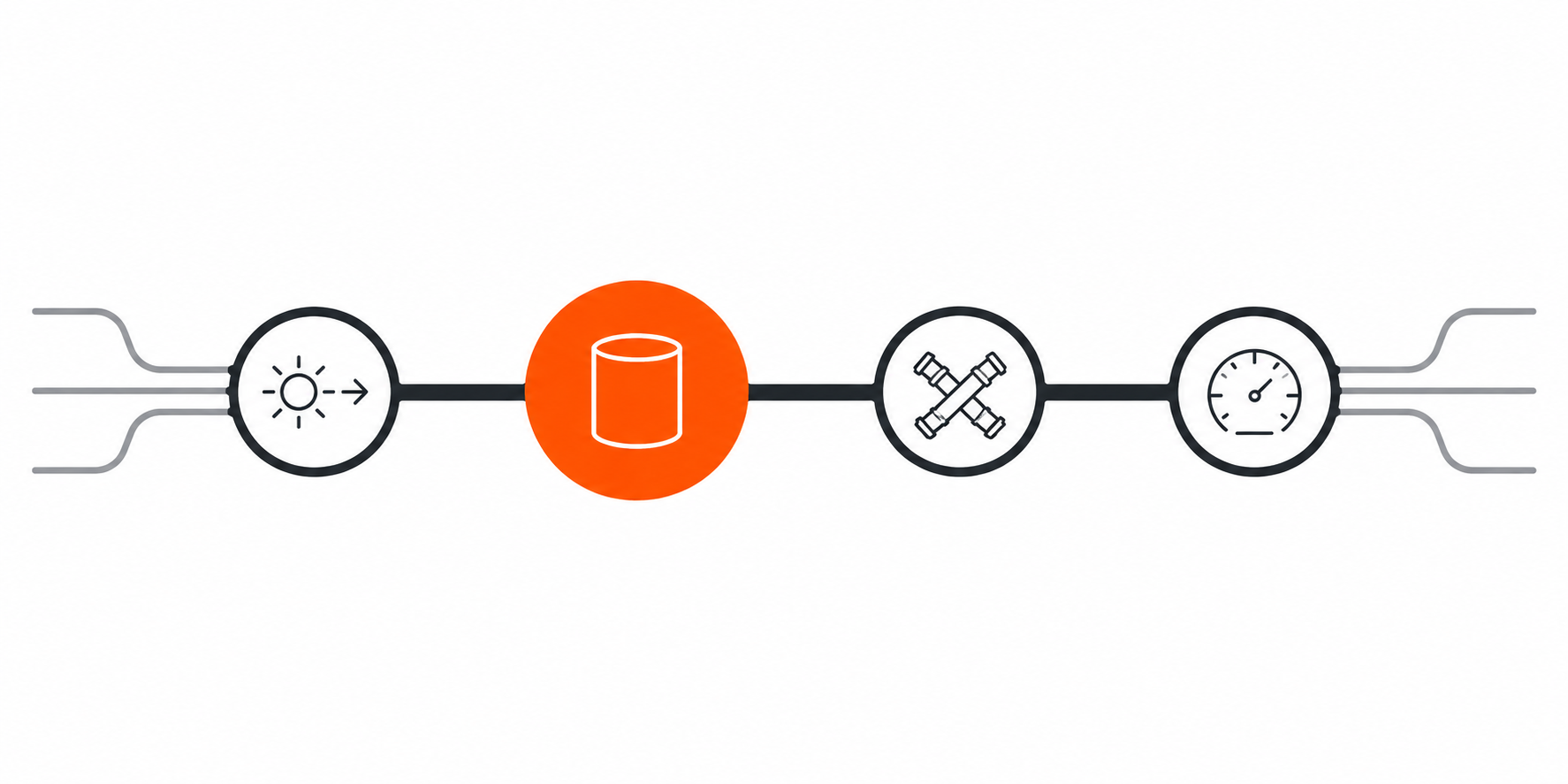
A complete solution has four connected layers. Each layer affects system performance, cost, and the facility’s ability to use heat when it is needed.
Three reference architectures
The best architecture depends on the facility’s available energy sources, temperature requirements, load profile, and space. The following three configurations illustrate common ways to combine a source with thermal storage.
How thermal storage makes heat dispatchable
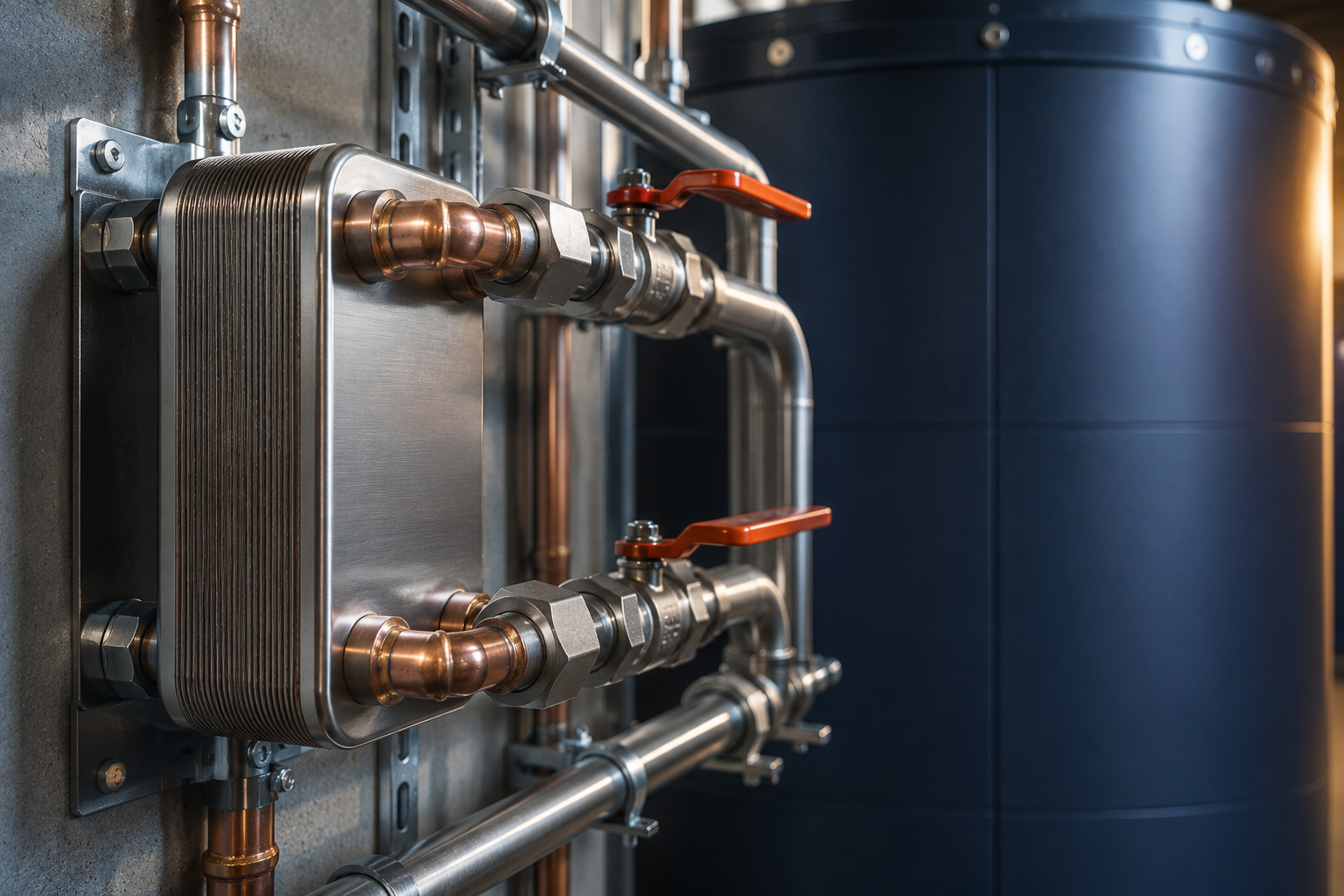
Without storage, heat generally must be produced at the same time it is used. That can require equipment to follow short-term demand changes, operate during expensive periods, or discard available heat when the load is not present.
Thermal storage changes that relationship. A system can charge the tank when a heat pump is operating efficiently, when solar energy is available, or when waste heat is being produced. Controls can then discharge the stored heat when the facility needs it.
For domestic hot water and sanitation, storage can provide a reserve for scheduled or variable demand. For space heating and process heat, it can help cover peaks and reduce the need for equipment to respond instantly to every load change. In some facilities, shifting heat production away from peak periods can also help reduce demand.
What does a thermal power solution cost?
Tank prices provide only a starting point for estimating a thermal power solution. Reference tank prices can range from $1,190 to $5,798, depending on the tank and its specifications.
The installed cost is higher than the tank price because a working system also requires the appropriate heat source, conversion equipment, piping, controls, heat exchangers, labor, and commissioning. Site conditions can materially change the scope. For example, a retrofit may require more work to connect to existing systems than a new installation designed around the thermal solution.
A useful cost evaluation should therefore consider the complete system rather than comparing storage tanks alone. Buyers should define the required temperature, peak and daily thermal loads, available heat sources, storage duration, connection points, control strategy, and available installation space.
The value of storage also depends on how the facility operates. A system may provide benefits by using recovered heat, shifting heat production, reducing demand during peak periods, or improving the availability of hot water and process heat. These operating benefits should be evaluated alongside equipment and installation costs.
Frequently Asked Questions
Is a thermal power solution the same as a power plant?
Not necessarily. At utility scale, thermal power commonly means generating electricity from heat. At facility scale, it can mean producing, recovering, storing, and distributing useful heat for commercial or industrial loads.
What are the main components of a facility thermal power solution?
The four main layers are the energy source, conversion equipment, thermal storage, and controls and distribution. Together, they produce or recover heat, store it, and deliver it when the facility needs it.
Why is thermal storage important?
Thermal storage separates the timing of heat production from the timing of demand. This makes heat dispatchable and can support hot water, sanitation, space heating, process heat, and demand reduction.
Which architecture is best for a commercial facility?
The best architecture depends on the facility’s heat sources, temperature requirements, load profile, available space, and operating schedule. Heat pumps, PVT solar, and waste-heat recovery each fit different site conditions and can be paired with storage.
How much does a thermal storage tank cost?
The referenced tank prices range from $1,190 to $5,798. This is not the installed cost of a complete thermal power solution, which also depends on the heat source, piping, controls, heat exchangers, labor, and site complexity.
Conclusion
A facility thermal power solution treats heat as a controllable resource rather than an output that must be used immediately. Its four layers—energy source, conversion equipment, storage, and controls and distribution—work together to deliver heat when and where it is needed.
The right architecture may pair a heat pump, PVT solar system, or waste-heat recovery system with thermal storage. For commercial buyers, the key decision is not simply the price of a tank. It is how the complete system will meet thermal loads, shift energy use, recover available heat, and operate within the facility’s site and cost constraints.