Looking to the Sky for a New Way to Cool Buildings
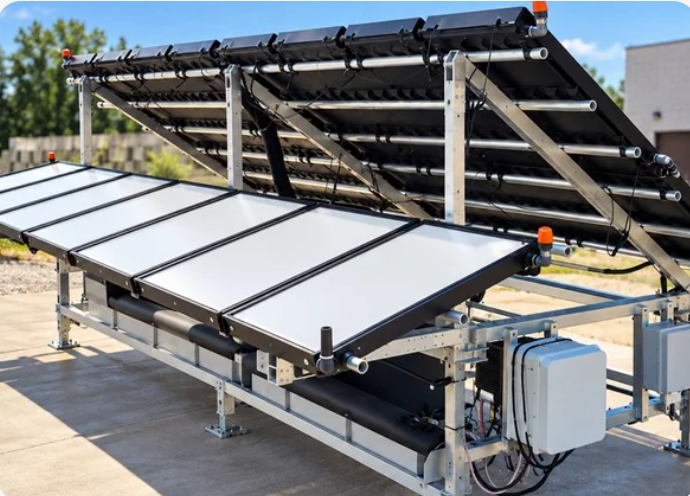
Thermal Energy HQ is developing SkyRadiance, a water-based cooling system that harnesses the cold sky to help manage building heat. Its award-winning approach combines radiative cooling film with patented fluid management as the company prepares for commercial availability.
Commercial cooling systems must release unwanted heat, a process that requires energy and, in evaporative systems, water. SkyRadiance is designed to reduce those demands while working alongside existing equipment.
We are proud to say the system won the 2027 AHR Expo Innovation Award in the Cooling category, a testament to its innovation. Here’s a closer look at how it works.
The challenge: releasing unwanted heat
Cooling equipment moves heat from where it isn’t wanted to somewhere it can be released. Conventional systems reject heat into the outdoor environment or use water evaporation to carry it away.
Radiative cooling opens another route. Surfaces naturally emit energy as infrared radiation. Certain wavelengths can pass through the atmosphere and escape toward space, allowing a surface to release heat to something colder than the surrounding air.
How SkyRadiance works
SkyRadiance uses two components to carry heat from a building’s cooling system and release it toward the sky:
- Radiative cooling film: Developed by 3M, the film reflects incoming sunlight while emitting infrared heat. Limiting solar heat gain helps the surface continue rejecting heat during daylight hours.
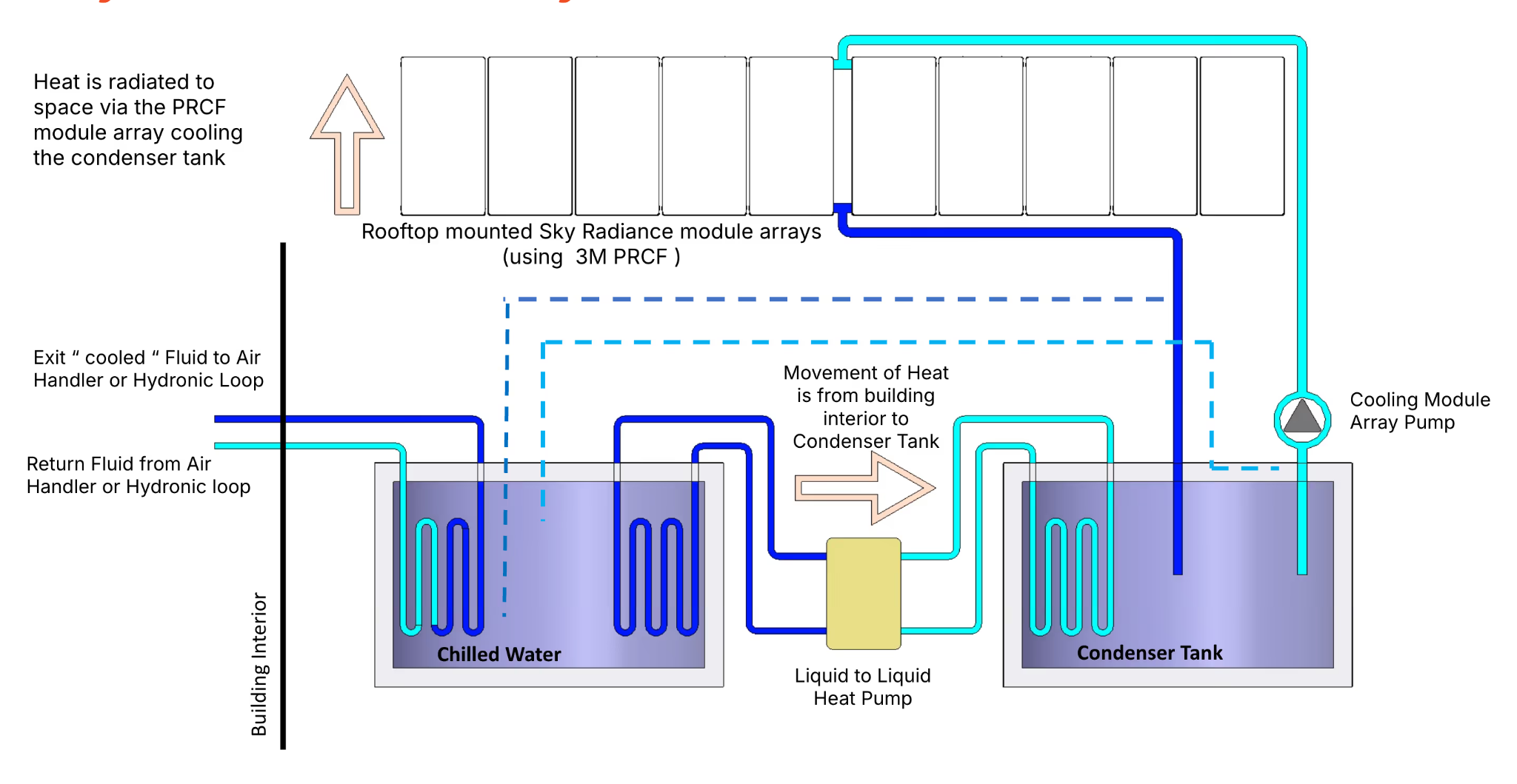
- TEHQ’s patented fluid management system: Water carries heat through a serpentine path beneath the film. A pump moves water to the top of the module, and gravity assists its downward flow as heat transfers to the cooling surface.
The film works passively, while circulating water requires pumping energy.
Supporting commercial cooling
SkyRadiance is designed to reduce the amount of heat conventional cooling equipment must reject in commercial buildings, data centers and industrial facilities. It provides an additional pathway when conditions are favorable, while chillers and heat pumps maintain the capacity and control these facilities need.
Depending on the application, this can help reduce mechanical cooling energy use. Where it offsets evaporative heat rejection, it can also reduce water consumption.
Thermal storage adds flexibility by holding cooled water for later use. For example, a system could reject heat during favorable nighttime conditions and store cooled water for daytime demand.
Performance depends on local conditions and system design. Clear, dry skies favor radiative cooling, while humidity, cloud cover and water temperatures influence heat rejection. Available space and sky exposure also determine whether an installation is suitable.
Thermal Energy HQ is preparing SkyRadiance for full commercial availability. Pilot projects offer an opportunity to evaluate performance under actual operating conditions and refine integration with existing equipment.
See SkyRadiance at Booth N1056 at AHR Expo in Chicago, January 25–27, 2027, and contact us to discuss potential applications.