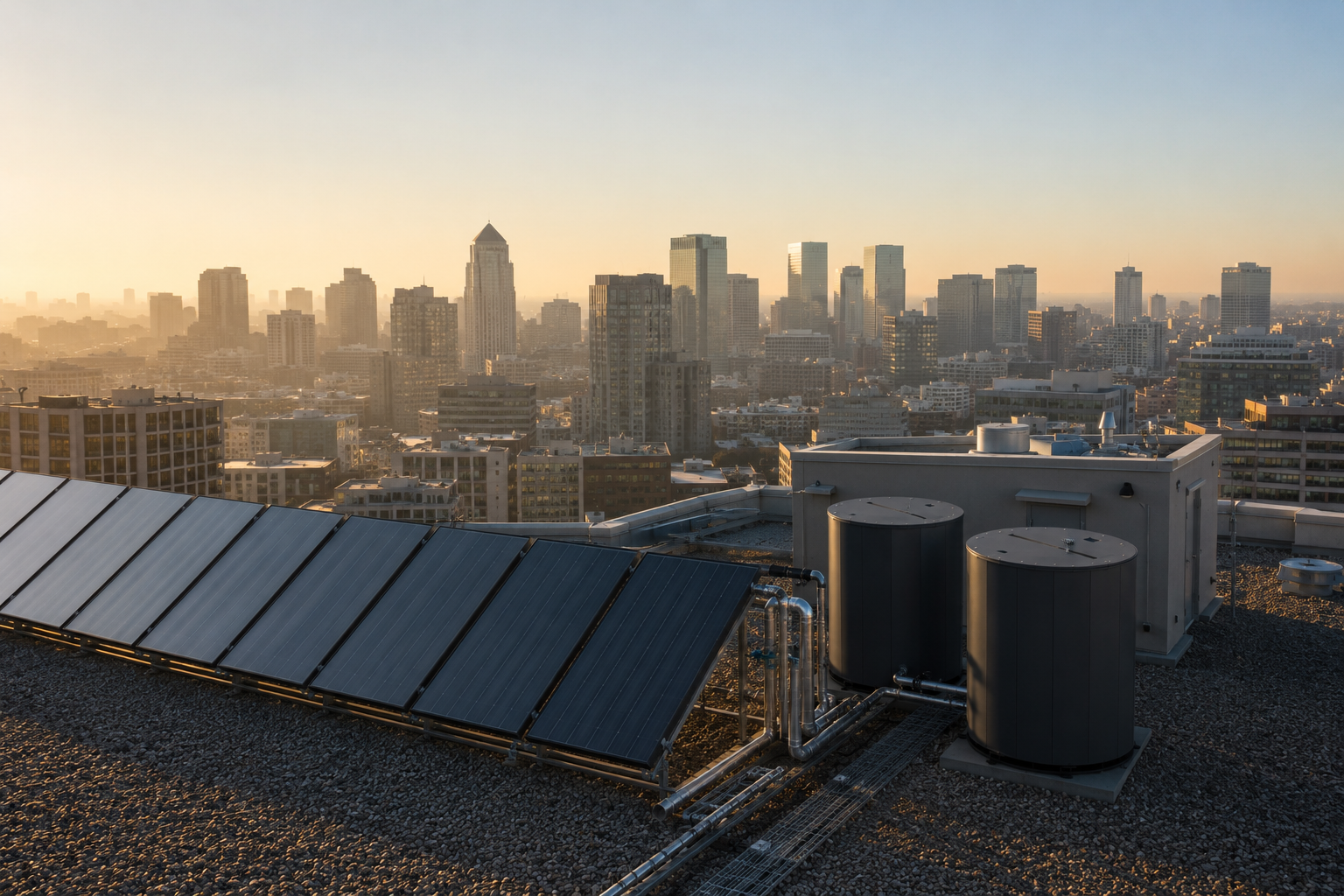
Commercial decarbonization is often reduced to a simple idea: install solar panels. Solar can be part of the solution, but it is rarely the first or only move. In many commercial buildings, a large share of the energy burden comes from thermal loads, including hot water, space heating, process heat, and cooling.
Key Takeaways
The right decarbonization plan is an operating sequence, not a shopping list of technologies. A building that adds generation before addressing excessive loads may oversize equipment, miss demand charges, and leave combustion-based thermal systems in place.
Owners and operators should treat decarbonization as a coordinated plan for energy, equipment, controls, capital planning, and compliance. The objective is to reduce emissions while preserving comfort, reliability, production, and financial performance.
What is commercial decarbonization?
Commercial decarbonization is the process of reducing the greenhouse gas emissions associated with a commercial building's operations. It includes lowering energy demand, replacing fossil-fuel-based thermal systems, managing when energy is used, and supplying remaining energy with lower-carbon sources.
The work extends beyond electricity generation. A building may have solar panels and still produce substantial emissions from natural gas, propane, or other on-site fuels used for water heating, space heating, cooking, or process heat. It may also draw significant electricity during high-cost or higher-carbon periods because of cooling, heating, ventilation, pumps, and other equipment.
A useful plan therefore looks at both the amount of energy a building uses and the source and timing of that energy.
Where commercial building emissions actually come from
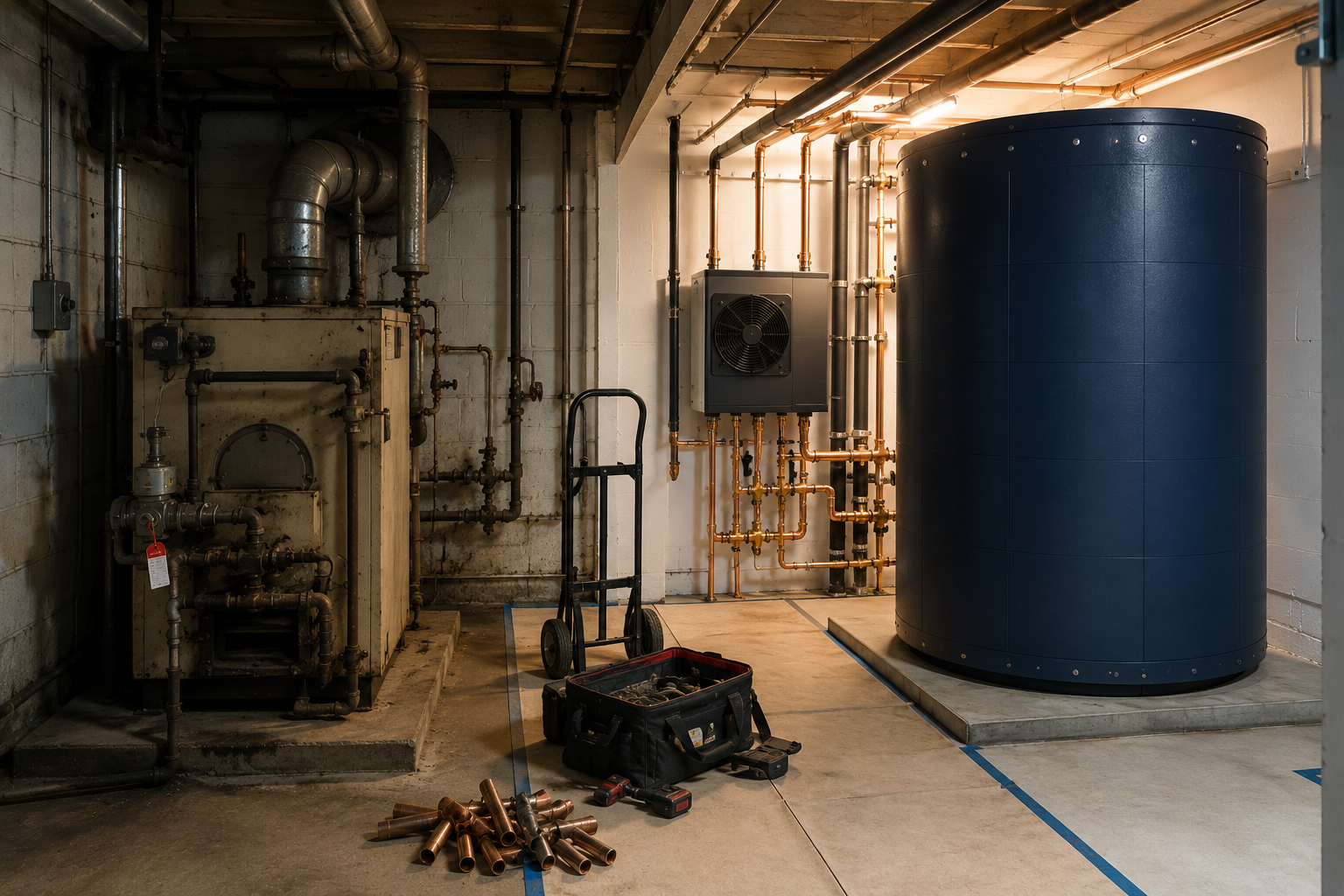
Commercial emissions generally come from two major energy pathways: purchased electricity and fuels burned on site. These sources behave differently and require different solutions.
Purchased electricity emissions are associated with power bought from the grid. The emissions intensity of that electricity can vary by location, utility mix, and time of use. Electricity consumption may be driven by lighting, ventilation, cooling, motors, refrigeration, plug loads, and electric heating equipment.
On-site fuel emissions come directly from burning fuels at the property. Common thermal applications include domestic hot water, space heating, cooking, boilers, backup systems, and process heat. These emissions do not disappear simply because a building also purchases renewable electricity or installs solar.
Thermal loads deserve particular attention because they can be large, persistent, and expensive to serve. Hot water and heating demand can continue during periods when solar production is limited. Cooling can create large electricity peaks. Process heat may require a separate assessment because temperature requirements and operating schedules vary.
The first practical step is to establish a baseline that connects utility bills and fuel use to building operations. Review electricity consumption, fuel consumption, demand peaks, operating schedules, equipment condition, and major thermal loads. This baseline helps identify which measures will reduce energy use, emissions, cost, or all three.
The regulatory clock
Building performance standards are accelerating commercial decarbonization. Rather than focusing only on which equipment a building installs, these standards can establish required performance outcomes for energy use or emissions. That shifts the owner's question from whether to act to how to plan, measure, and document compliance.
The regulatory timeline can affect capital planning, lease decisions, equipment replacement, and renovation schedules. A project that is financially reasonable today may become more expensive if it is delayed until an aging boiler, water heater, or cooling system fails under a shorter compliance timeline.
Owners and operators should identify the requirements that apply to the property, understand how performance will be measured, and align decarbonization projects with normal replacement cycles. The specific obligations depend on the property's location, size, use, and applicable rules, so regulatory review should be part of the early planning process.
The four-step sequence that pencils

The sequence matters because each step changes the size and economics of the next one. The goal is to avoid paying for capacity that unnecessary loads would have required and to make electrification more manageable during peak periods.
Step one is to measure and reduce loads. Benchmark electricity and fuel use, inspect schedules and controls, address envelope issues, reduce hot water waste, and improve equipment operation. Efficiency measures can lower operating costs and reduce the capacity required for heat pumps, storage, and generation.
Step two is to electrify thermal loads. Replace combustion-based water heating, space heating, and suitable process heat applications with electric technologies such as heat pumps or other appropriate systems. Electrification should be evaluated against required temperatures, operating schedules, available electrical capacity, comfort, reliability, and total cost.
Step three is to add storage. Storage allows the building to produce and hold useful energy when power is cheaper or lower carbon, then use that energy when demand is high. Thermal storage can be especially valuable because it directly serves hot water, heating, or cooling loads.
Step four is to generate on site. Once loads have been reduced, thermal systems have been electrified, and storage needs are understood, on-site generation can be sized to the actual operating profile. This may improve the utilization and economics of the generation system compared with installing it before the building's demand has been addressed.
Why storage is the economic keystone
Storage connects electrification to the realities of utility rates, demand peaks, equipment capacity, and renewable generation. Without storage, a heat pump may need to operate when electricity is most expensive or when the grid is most carbon intensive. With storage, the system can make heat at a more favorable time and deliver it later.
Thermal storage is particularly useful because the stored commodity is heat rather than electricity. A tank can hold hot water produced by a heat pump or solar thermal system and release it when the building needs it. This can reduce peak electrical demand, improve heat pump operating conditions, and shift production away from periods when electricity costs or emissions are higher.
Storage can also help an owner avoid oversizing generation or electrical infrastructure for short periods of peak demand. The value depends on the building's load profile, utility tariff, equipment sizing, controls, and operating schedule. It should therefore be modeled as part of the whole system rather than added as an isolated component.
The economic case is strongest when storage is coordinated with controls. Operators need a clear strategy for when to charge the tank, when to discharge it, how to maintain required temperatures, and how to respond to weather, occupancy, production, and utility signals.
What the hardware costs and the federal credit
Thermal Energy HQ tank pricing provides a useful hardware reference point: listed tank prices range from $1,190 to $5,798. That range is for the tank hardware context, not a complete project price.
Complete installed cost depends on the heat source, piping, controls, labor, integration with existing systems, electrical work, commissioning, and site conditions. A tank that appears inexpensive as a standalone product can require significant design and installation work, especially when it is connected to a heat pump, solar thermal system, boiler replacement, or complex commercial distribution system.
At a high level, federal Internal Revenue Code §48E may provide a tax credit framework for certain qualified clean energy property, including eligible energy storage technology, subject to applicable requirements. Eligibility, timing, ownership structure, prevailing requirements, and other rules can affect the amount and availability of any credit.
Owners should have a tax professional and qualified project advisors confirm whether a specific thermal or other storage project qualifies, how the credit applies, and what documentation is required. The credit should improve an already sound project plan rather than substitute for accurate sizing, installation pricing, and operating analysis.
Frequently Asked Questions
Is commercial decarbonization mainly about installing solar?
No. Solar can help address purchased electricity, but commercial emissions also come from on-site fuels and large thermal loads such as hot water, space heating, process heat, and cooling. Efficiency, electrification, storage, and generation should be evaluated as a sequence.
Why should a building reduce loads before electrifying?
Reducing loads can lower the size and cost of heat pumps, electrical service upgrades, storage, and on-site generation. It can also improve operating performance and reduce the amount of energy the building needs throughout the year.
What does thermal storage do?
Thermal storage holds useful heat or hot water produced by a heat pump or solar thermal system so it can be used later. This shifts production away from peak demand periods and can allow the system to use cheaper or lower-carbon power.
How much does a commercial thermal storage tank cost?
Thermal Energy HQ tank pricing ranges from $1,190 to $5,798 as a hardware reference. Complete installed cost depends on the heat source, piping, controls, labor, integration, and site conditions.
Can a commercial storage project qualify for the federal §48E credit?
Certain eligible clean energy and storage projects may fall within the federal §48E credit framework, but eligibility and credit value depend on project-specific requirements. Owners should consult a tax professional and qualified project advisors before including the credit in a budget.
When should an owner add on-site generation?
On-site generation is generally best evaluated after loads have been measured and reduced, thermal systems have been electrified where practical, and storage needs have been modeled. This sequence helps size generation around the building's actual demand profile.
Conclusion
The starting point for commercial decarbonization is not a technology purchase. It is an operating baseline that shows where energy is used, which loads are thermal, which emissions come from purchased electricity or on-site fuel, and when demand occurs.
From there, the four-step sequence provides a practical path: reduce loads, electrify thermal systems, add storage, and generate on site. For many commercial properties, thermal storage makes the sequence work economically by separating the time heat is produced from the time it is needed.