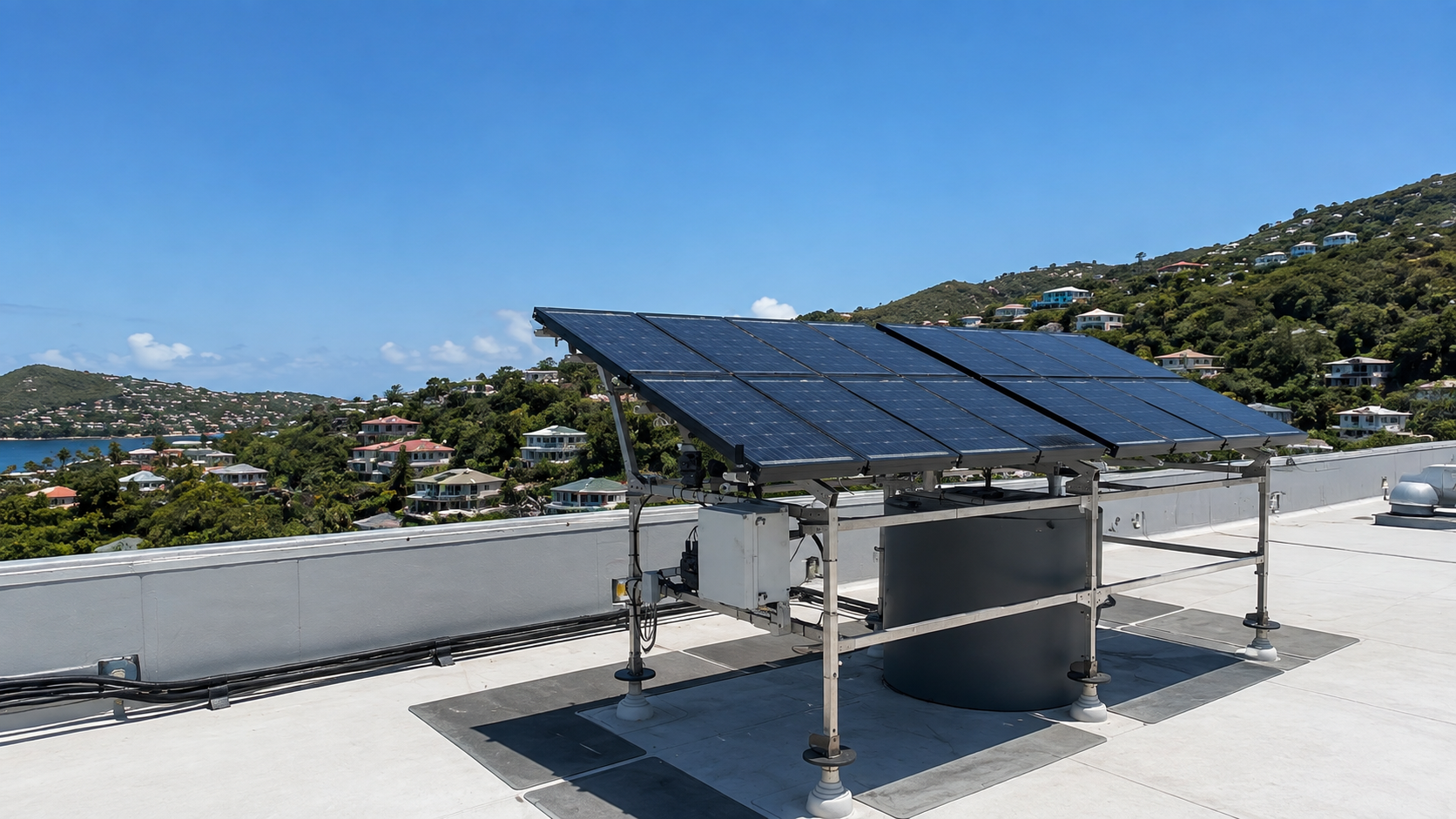
Starting May 6, 2029, newly manufactured residential water heaters in several common product classes will have to meet higher federal efficiency standards. The biggest change is electric storage water heating: most common 20- to 120-gallon electric storage products will need to reach efficiency levels normally delivered by heat pump water heaters.
That does not mean every homeowner must replace a working tank in 2029. It does not mean electric resistance water heaters disappear from every size and application. It does not ban gas storage water heaters. It also does not mean every gas tankless product must become condensing; a separate federal rule aimed at consumer gas-fired instantaneous water heaters was withdrawn in 2025.
The practical change is at the manufacturing line. Covered products manufactured on or after May 6, 2029 must meet the new standards. Products manufactured earlier can continue to move through distribution and be sold while inventory remains.
For contractors, distributors, designers, and building owners, the years before 2029 are a preparation window. Heat pump water heaters need different attention to space, airflow, condensate, noise, electrical service, recovery strategy, and storage volume than a simple like-for-like resistance replacement. The equipment decision will increasingly become a system-design decision.
Key Takeaways
The May 2024 final rule is often summarized as a requirement that all electric water heaters become heat pumps and all gas water heaters become condensing. That summary is not accurate. The rule applies different standards to different consumer storage-water-heater product classes.
The current status should be checked against the DOE Consumer Water Heaters product page and current 10 CFR 430.32(d) before publication or specification because federal appliance policy remains time-sensitive.
What changes on May 6, 2029?
DOE's May 2024 final rule amended the minimum Uniform Energy Factor, or UEF, for multiple classes of consumer water heaters. UEF is a laboratory-based efficiency metric that accounts for the useful hot water delivered relative to the energy consumed under a defined draw pattern.
The most important national market shift is for standard electric storage water heaters. The complete legal table is in 10 CFR 430.32(d)(2). The table matters because shorthand phrases such as “all electric tanks become heat pumps” erase product classes that DOE deliberately preserved.
The DOE benefits summary and the May 2024 final rule published at 89 FR 37778 provide additional federal background.
2029 Minimum Standards by Product Class
Standard Electric Storage Water Heater
Covered volume: 20 through 55 gallons, excluding DOE-defined small units
2029 minimum: UEF 2.30
Practical effect: Most products will need heat pump technology.
Standard Electric Storage Water Heater
Covered volume: Over 55 through 120 gallons
2029 minimum: UEF 2.50
Practical effect: Heat pump technology becomes the normal compliance path.
Small Electric Storage Water Heater
Covered volume: 20 through 35 gallons in qualifying low-capacity configurations
2029 minimum: Formula-based resistance-level UEF
Practical effect: Defined compact applications can remain electric resistance.
Grid-Enabled Water Heater
Covered volume: Over 75 gallons and meeting the federal grid-enabled definition
2029 minimum: Separate formula-based UEF
Practical effect: Large connected resistance-storage units remain a specific compliance path.
Gas-Fired Storage Water Heater
Covered volume: Product-class-specific
2029 minimum: Formula-based UEF
Practical effect: Common sizes become modestly more efficient. Gas water heaters are not banned.
Which electric water heaters will usually become heat pumps?
For standard electric storage water heaters with an effective storage volume from 20 through 55 gallons, excluding the small-electric class, the 2029 minimum is UEF 2.30 across the very small, low, medium, and high draw patterns. For units over 55 through 120 gallons, the minimum is UEF 2.50.
Those numbers are far above the efficiency of a conventional electric resistance tank. Resistance elements turn electricity into heat at nearly one-for-one at the element, but the federal test also captures tank losses and delivery performance. A heat pump moves heat from the surrounding air into the water, allowing it to deliver substantially more heat per unit of electricity.
DOE estimates the amended rule will shift about 61 percent of the residential water-heater market to heat pump water heaters once it takes effect. The exact products that reach the market may not look identical to today's models. The standard leaves manufacturers several years to develop lower-cost equipment, compact configurations, 120-volt options, improved controls, and products designed for colder or tighter installation spaces.
The important electric exceptions
The rule preserves several product classes because a single heat-pump configuration will not fit every application.
Small electric storage water heaters are a defined class, not simply any tank with a small label. Under the 2029 table, the class covers qualifying units from 20 through 35 gallons under the applicable low-capacity draw patterns. The updated test procedure and limits on first-hour delivery and permanent high-temperature operation are intended to prevent a nominally small resistance tank from being used as a loophole for a larger application.
Very small electric storage water heaters under 20 gallons and tabletop water heaters have separate formula-based standards. Grid-enabled water heaters over 75 gallons also have a separate federal class. These connected products can provide substantial thermal storage and respond to utility controls, so DOE treats them differently from ordinary residential resistance tanks.
Products over 120 gallons appear under a separate standard line and may also cross into a different equipment classification depending on input and construction. Never size a commercial or multifamily plant from the residential shorthand alone.
What happens to gas storage water heaters?
Gas-fired storage water heaters remain available. For many units from 20 through 55 gallons, the new rule raises efficiency modestly. The NEEA installer fact sheet summarizes the gain as roughly 8 to 16 percent depending on size and draw category. It also notes that the common-size improvement can be achieved without a blanket requirement for new condensing venting or an added electrical outlet.
For gas storage units over 55 through 100 gallons, the installer sheet reports no stringency increase from the current standard for the representative categories it presents. The legal requirements remain product-class and formula based, so model-level compliance should be checked against the current federal table rather than a generic percentage.
The clean takeaway is simple: the 2029 storage-water-heater rule is not a federal ban on natural gas. It raises efficiency floors by product class.
What happened to the gas tankless rule?
This is where several public explainers are now wrong or incomplete.
DOE published a separate final rule for consumer gas-fired instantaneous water heaters in December 2024. That rule would have required higher efficiency for many tankless products beginning in late 2029. Congress disapproved the rule under the Congressional Review Act, and DOE published its withdrawal effective May 20, 2025.
As of August 26, 2026, DOE's Consumer Water Heaters page lists that gas-fired instantaneous final rule as withdrawn. Therefore, an article that says the active May 2024 rule broadly requires gas-fired water heaters to use condensing technology is mixing the withdrawn tankless action with the still-active storage-water-heater standards.
This distinction should be re-checked at publication because federal appliance policy remains active, but it is the current status reflected by DOE.
Why effective storage volume matters
The updated test procedure uses effective storage volume rather than relying only on the tank's labeled physical volume. Effective storage volume accounts for both the water held in the tank and the temperature at which it can be stored.
That matters because hotter stored water can be mixed with cold water to deliver more usable hot water. Without an effective-volume adjustment, a manufacturer could use a smaller physical resistance tank, store water at a much higher temperature, and deliver the equivalent of a larger tank while remaining in a less stringent size class.
DOE also added a high-temperature test for products with permanent high-temperature modes. Together, the effective-volume calculation and high-temperature testing make it harder to use temperature and mixing valves to avoid the heat-pump-level standard for ordinary 40- and 50-gallon applications.
Temporary boost functions and specific demand-response configurations can be treated differently. Product certification, not field assumptions, determines which class a model occupies.
What installers should prepare for
Replacing a resistance tank with a heat pump water heater is still familiar plumbing work, but it adds design checks that cannot be ignored.
Space and airflow
A heat pump water heater removes heat from the surrounding air and rejects cool, dry air. The installation location needs enough air volume or a designed duct path. A tight closet that worked for a resistance tank may need transfer grilles, ducting, or a different equipment location.
Condensate
The evaporator produces condensate. The installation needs a reliable drain path, correct slope, and protection against leakage or blockage.
Electrical service
Many heat pump water heaters use 240-volt circuits and include resistance elements for backup and recovery. Newer 120-volt products can simplify some replacements, but their recovery and operating modes must be matched to the load. The nameplate and manufacturer instructions govern.
Noise and cold-air discharge
The compressor and fan create sound, and the unit cools the space around it. Bedrooms and small conditioned closets need more care than garages, basements, utility rooms, or deliberately ducted installations.
Storage and recovery
A heat pump usually heats water more slowly than a high-output resistance element. The solution is not automatically a larger compressor. It may be more usable storage, a better first-hour rating, scheduled charging, a controlled mixing strategy, or a central system designed around the actual draw profile.
Controls and demand response
Connected water heaters can preheat before a utility peak and coast through expensive hours. That turns the water tank into a thermal battery. Controls are valuable only when they preserve customer comfort and do not trigger unnecessary resistance backup.
Why the rule makes thermal storage more important
The 2029 standard is an equipment-efficiency rule, not a thermal-storage mandate. But the move toward heat pump water heating changes the economics of storage.
A heat pump is most efficient when it can run steadily under favorable conditions. A building's hot-water demand is rarely steady. Homes peak in the morning and evening; multifamily and hospitality buildings can produce sharp, concentrated draws; utility prices may peak at the same time. Storage separates the efficient production schedule from the demand schedule.
That creates several design advantages:
From single-family replacements to larger systems
For a single-family replacement, this may mean selecting the right integrated heat pump water heater and installation location. For a large building, it can mean separating heat generation from storage entirely and sizing each against the measured load. Those are different equipment classes and different engineering problems, even though the underlying thermal-storage logic is the same.
For broader context on storage systems, see Thermal Energy HQ's thermal tank overview and thermal energy storage article.
Residential versus commercial: do not use the wrong rule
DOE separates consumer water heaters from commercial water-heating equipment using definitions that include fuel, input rating, storage volume, and operating configuration. A central plant serving apartments, a hotel, a school, or an industrial process may fall under commercial equipment standards rather than the consumer rule discussed here.
That distinction affects the efficiency metric, compliance date, required technology, and test procedure. A residential-duty product installed in a multifamily project may still be a consumer water heater; a high-input central storage heater or hot-water supply boiler may be commercial equipment. The application alone does not decide the classification.
Before specifying around the 2029 rule, identify the exact equipment category under 10 CFR Parts 430 and 431. Do not assume that a 2029 headline written for homeowners applies unchanged to a central commercial system.
Costs, savings, and what the federal estimate means
DOE estimates that the May 2024 final rule will save 17.6 quadrillion Btu over 30 years of product shipments, reduce carbon dioxide emissions by about 332 million metric tons, and save consumers an estimated $124 billion on energy and water bills over the analysis period. DOE also estimated more than $7 billion in annual household utility-bill savings once the standards are fully reflected in the installed market.
For a common electric resistance replacement, DOE estimated that a compliant heat pump water heater could save roughly $1,800 in utility costs over the appliance's life on average. Actual savings depend on local electricity rates, climate, installation location, operating mode, hot-water use, and how often resistance backup runs.
Upfront cost is also site-specific. Electrical work, condensate routing, ducting, relocation, and space modifications can outweigh the equipment-price difference in a difficult retrofit. The correct comparison is installed lifecycle cost, not the tank price alone.
What incentives are available now?
Do not rely on a pre-2026 article that says every qualifying heat pump water heater still receives a federal residential tax credit. The IRS Energy Efficient Home Improvement Credit information states that the credit under Section 25C is not available for property placed in service after December 31, 2025.
State, local, and utility rebates may still be available, and program rules change frequently. Check the current program at the installation address before presenting an incentive in a proposal. Confirm eligibility, approved product lists, installation deadlines, income requirements, and whether a rebate can be stacked with another program.
Frequently Asked Questions
Will I have to replace my water heater in 2029?
No. The rule applies to covered products manufactured on or after May 6, 2029. It does not require a homeowner to remove a working water heater on that date.
Can stores sell older water heaters after May 6, 2029?
Products manufactured before the compliance date can continue to be sold while inventory remains. The manufacturing date, not the retail sale date alone, controls the new-product standard.
Are electric resistance water heaters banned?
No. Most standard electric storage products in common 20- to 120-gallon classes will need heat-pump-level efficiency, but DOE maintains separate classes for qualifying small and very small storage water heaters, tabletop units, grid-enabled water heaters, and other configurations.
Are gas water heaters banned?
No. The active storage-water-heater rule raises efficiency requirements for gas-fired storage products by class. It does not ban natural gas or require homeowners to switch fuel.
Will all gas tankless water heaters have to be condensing?
Not under the withdrawn December 2024 rule. DOE states that the separate consumer gas-fired instantaneous final rule was withdrawn effective May 20, 2025. Check the DOE product page for any later action before publication or specification.
Does every 40- or 50-gallon electric tank become a heat pump?
Most standard products in those physical sizes will need heat-pump-level efficiency, but classification uses effective storage volume, draw pattern, first-hour performance, temperature capability, and DOE product definitions. A model's certification determines compliance.
Does the rule apply to commercial buildings?
It applies to covered consumer water-heater products, including those installed in some building types. Commercial water-heating equipment follows separate federal definitions and standards. Identify the equipment class before applying the rule.
Why does storage size matter more with a heat pump?
Heat pumps produce hot water efficiently but generally recover more slowly than large resistance elements. Enough usable storage lets the equipment meet short demand peaks without relying heavily on backup heat.
Conclusion
The 2029 federal rule is a major market shift, but it is not the blanket appliance ban described in many headlines. Most common electric storage water heaters manufactured after May 6, 2029 will move to heat-pump-level efficiency. Defined electric resistance products remain. Gas storage water heaters remain. Existing equipment can stay in service. Pre-compliance inventory can still be sold. And the separate gas tankless standard published in 2024 was withdrawn in 2025.
The real work is preparation. Installers need heat pump water heater skills before emergency replacements become the normal sales call. Designers need to treat airflow, condensate, electrical service, controls, recovery, and storage as one system. Building owners need to distinguish residential products from commercial equipment and compare installed lifecycle cost rather than equipment price.
The rule changes which equipment reaches the market. Good storage and system design determine whether that equipment performs well in the building.