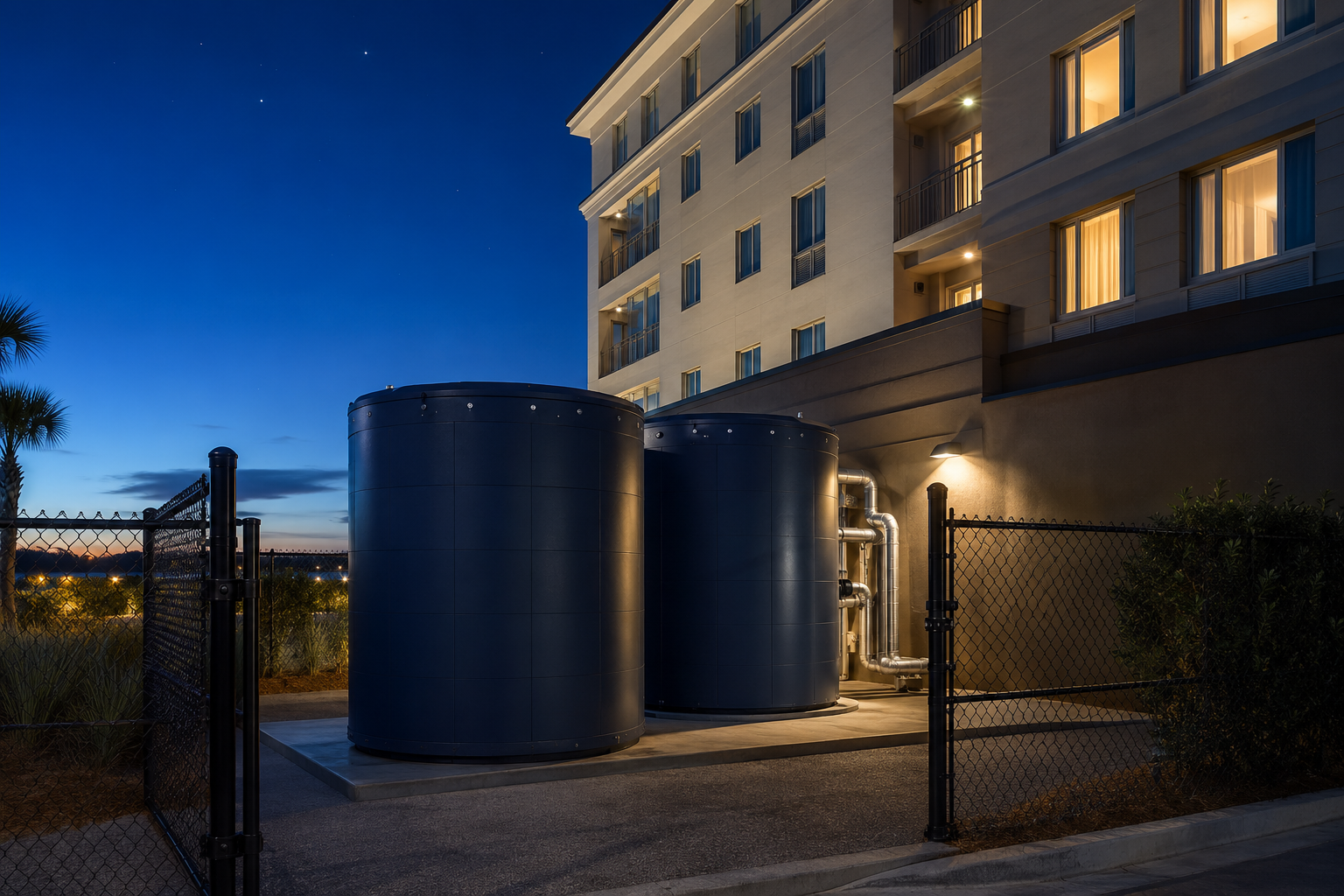
Thermal energy storage (TES) tanks can help South Carolina properties store useful heat and manage when that heat is produced and used. The state is notable because its solar energy tax credit statute expressly names tanks and heat exchangers, but eligibility depends on the system configuration, how the equipment is used, and required certification.
Key Takeaways
Choosing a TES tank is not only a tank-size decision. A buyer must evaluate the heat source, storage capacity, operating temperatures, controls, heat exchangers, installation requirements, and available incentives together.
South Carolina buyers should pay particular attention to documentation. The state's solar energy credit specifically references tanks and heat exchangers, but a tank is not automatically eligible simply because it stores thermal energy. The full system must meet the applicable requirements.
What is thermal energy storage?
Thermal energy storage is the process of storing heat for use at a later time. In a tank-based system, water or another suitable medium is heated and held until the building or process needs that thermal energy.
A TES tank is one component of a larger system. Depending on the application, the system may include a solar or other heat source, pumps, heat exchangers, controls, piping, insulation, and equipment that delivers the stored heat to domestic water, space heating, or another thermal load.
The value of storage depends on how well the tank's capacity and temperature range match the property's demand. A larger tank is not automatically better if the heat source, controls, or load cannot use the stored energy effectively.
Why TES makes sense in South Carolina
South Carolina's climate and solar resource can support systems that collect or produce heat during one period and use it later. Thermal storage can help align heat production with demand, particularly when the heat source and the building's hot-water or heating needs do not occur at the same time.
Storage can also help a property evaluate energy use as a complete system rather than as an isolated tank purchase. The right design may improve the usefulness of available heat, but the outcome depends on the site's load profile, equipment configuration, controls, and installation quality.
South Carolina is also one of the few states whose solar energy tax credit statute expressly names tanks and heat exchangers. That makes incentive review an important part of system planning, although eligibility still depends on the statutory requirements and certification.
How much does a thermal energy storage system cost?
The following tank prices provide a starting point for comparing equipment sizes. They are tank prices, not complete installed-system prices.
A complete system can add the heat source, piping, controls, heat exchangers, labor, insulation, commissioning, and site-specific work. Existing mechanical rooms, structural requirements, access, utility connections, and integration with current equipment can all affect the final installed cost.
South Carolina and federal incentives
Incentive eligibility should be evaluated using the complete system design, not only the tank invoice. Buyers should preserve equipment specifications, certification records, system diagrams, invoices, and installation documentation.
25% state solar energy credit
South Carolina Code §12-6-3587 provides a 25% solar energy credit for qualifying solar energy systems used for heating water. The statute defines the system to include controls, tanks, pumps, heat exchangers, and equipment directly used in the system.
The annual claim is capped at $3,500 per facility or 50% of tax liability. Any unused credit can be carried forward for 10 years.
SRCC or comparable certification is required. Because eligibility depends on the system configuration and certification, buyers should verify that the proposed equipment and complete installation meet the requirements before relying on the credit.
80% distributed energy property tax exemption
South Carolina Code §12-37-220(B)(52) can exempt 80% of the fair market value of qualifying distributed energy resources for 10 years.
The property tax treatment depends on the system configuration and whether the equipment qualifies under the applicable provision. Buyers should confirm the treatment with the county assessor or the South Carolina Department of Revenue rather than assuming that every TES tank or complete system receives the exemption.
Federal Clean Electricity Investment Credit
The Federal Clean Electricity Investment Credit may be relevant to eligible projects, but its application depends on the project, equipment, ownership, and current federal requirements. The credit should be evaluated separately from South Carolina's state solar energy credit.
Because federal eligibility and calculation can depend on details outside the tank itself, buyers should review the complete project with a qualified tax professional before including a federal credit in the financial model.
Modular tanks vs welded tanks
Modular tanks are assembled from sections or standardized components. They can be useful when access is limited or when a project may need staged installation. Their suitability depends on the required volume, operating conditions, connection details, and available installation space.
Welded tanks are fabricated as a more integrated vessel and may be selected for larger or more specialized applications. They can require more planning for delivery, access, structural support, and field work.
Neither construction approach is automatically right for every South Carolina project. Compare the tank's capacity, certification, pressure and temperature requirements, insulation, serviceability, delivery plan, and total installed cost.
How to size and select a system
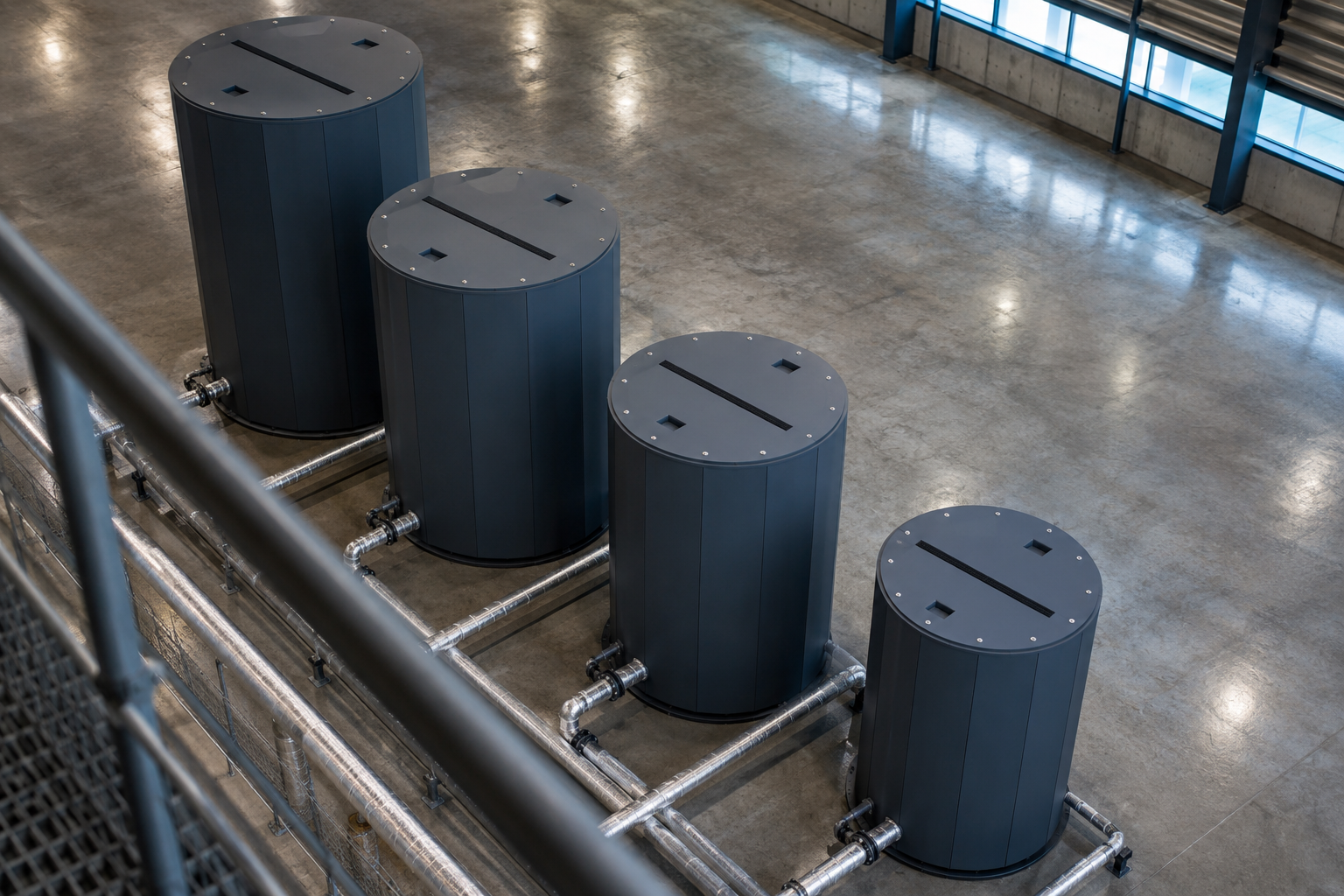
Start with the property's thermal load. Review hot-water demand, process requirements, operating schedules, peak demand, and the times when heat is available from the proposed source.
Next, match the required storage capacity and operating temperature to the heat source and load. The listed tank sizes range from 12.0 kWh to 108.0 kWh of thermal capacity, but the appropriate size depends on how the system will be charged and discharged.
Finally, evaluate the complete installation. A tank that appears inexpensive may require significant additional work for heat exchangers, controls, piping, pumps, labor, access, or integration with existing equipment.
Frequently Asked Questions
Are thermal energy storage tanks automatically eligible for South Carolina's solar energy credit?
No. South Carolina Code §12-6-3587 expressly includes tanks and heat exchangers in the definition of a qualifying solar energy system used for heating water, but eligibility depends on the complete system configuration, intended use, and required SRCC or comparable certification.
What is the lowest listed tank price?
The listed 80-gallon tank costs $1,190 and provides 12.0 kWh of thermal capacity. This is equipment pricing for the tank and does not represent the cost of a complete installed system.
What additional costs should be included in a TES budget?
A complete installed system may require a heat source, piping, controls, heat exchangers, labor, insulation, commissioning, and site-specific work. Access, structural conditions, existing equipment, and integration requirements can also affect the final cost.
Can a TES system qualify for a South Carolina property tax exemption?
South Carolina Code §12-37-220(B)(52) can exempt 80% of the fair market value of qualifying distributed energy resources for 10 years. Treatment depends on the configuration, so the buyer should confirm eligibility with the county assessor or the South Carolina Department of Revenue.
Does South Carolina have an enacted commercial PACE program for financing?
South Carolina has no enacted commercial PACE program as of the brief date. PACE financing should not be included as an assumed funding option for a project.
Conclusion
Thermal energy storage can be a practical way to store useful heat and coordinate production with demand in South Carolina. Tank equipment pricing ranges from $1,190 for an 80-gallon unit to $5,798 for a 700-gallon unit, but the complete installed system will cost more once the heat source, piping, controls, heat exchangers, labor, and site conditions are included.
The state's 25% solar energy credit is especially relevant because the statute expressly names tanks and heat exchangers. However, buyers must verify the complete configuration, certification, annual credit limits, and carryforward rules. Property tax treatment also requires project-specific confirmation. The best system is the one that matches the property's thermal load, site, operating schedule, documentation requirements, and total installed budget.